

Barak UpdatesIndia & World UpdatesHappeningsBreaking NewsFeature Story
India’s Mental Health Quotient : A Deepening Crisis Among Youth and the Emerging Policy Challenge, written by Dr. Manoj Kumar Paul

// Dr. Manoj Kumar Paul//
(Former Principal, Women’s College, Silchar)
Introduction
Mental health has moved from the margins of public discourse to the centre of global policy conversations in recent years. While earlier frameworks of development focused largely on economic growth and physical health indicators, contemporary research increasingly recognizes that psychological well-being is equally critical for human productivity, social stability, and national progress. In rapidly transforming societies such as India, this dimension becomes even more significant, as millions of young people navigate unprecedented technological, economic, and social transitions.
A major contribution to the empirical understanding of global mental well-being is the work of Sapien Labs through its Global Mind Project, which has introduced the concept of the Mind Health Quotient (MHQ). The MHQ is a composite indicator designed to measure how effectively individuals function emotionally, cognitively, and socially in their daily lives. Unlike traditional psychiatric metrics that focus on the prevalence of disorders, the MHQ captures the broader spectrum of mental functioning.
The Global Mind Health 2025 Report—one of the largest global assessments of mental well-being—draws on responses from over one million individuals across 84 countries. Its findings have generated significant attention in both academic and media circles, particularly regarding India. Reports published in Indian Express and The Times of India highlight a concerning trend: Indian youth (18–34 years) rank 60th out of 84 countries, with an average MHQ score of 33, placing them in the “distressed or struggling” category. In contrast, older adults (55+) rank 49th, with a significantly higher average score of 96.

This stark generational contrast raises important questions about the evolving mental health landscape in India. Why are younger individuals reporting lower psychological well-being despite living in a more technologically advanced and economically dynamic environment? What structural and lifestyle factors contribute to this decline? And what policy interventions are necessary to address this emerging crisis?
This article seeks to answer these questions through a research-based analysis of the MHQ framework, India’s performance in the global survey, and the broader socio-economic implications of the findings.
Conceptual Framework: Understanding the Mind Health Quotient
The Mind Health Quotient (MHQ) represents a paradigm shift in the measurement of mental health. Traditional approaches often rely on diagnostic categories such as depression, anxiety, or schizophrenia. While these are clinically significant, they do not capture the full spectrum of mental functioning that influences everyday life.
The MHQ, by contrast, evaluates 47 different aspects of mental functioning, grouped into six broad domains:
Emotional regulation and mood stability
Cognitive abilities, including focus and clarity
Resilience and adaptability
Social connectedness and interpersonal functioning
Motivation, drive, and productivity
Mind–body integration
Each of these domains contributes to an individual’s ability to navigate daily challenges, maintain relationships, and pursue meaningful goals. The MHQ score, which typically ranges from –100 to +200, provides a holistic measure of this functioning.
Scores are categorized into different levels:
Below 0: Severe distress and functional impairment
0–50: Distressed or struggling
50–100: Enduring or managing
100–150: Succeeding
Above 150: Thriving
India’s youth score of 33 thus falls squarely within the “distressed” range, indicating systemic challenges rather than isolated cases of mental illness.
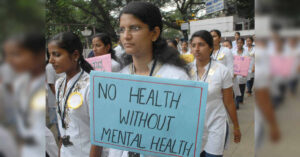
The survey collected data on lifestyle and environmental factors, including:
Sleep patterns
Dietary habits
Physical activity
Social relationships
Exposure to digital technology
Educational and employment status
India’s sample size—approximately 78,000 respondents—is sufficiently large to allow meaningful analysis across age groups. The study’s focus on generational comparison provides valuable insights into how mental health is evolving over time.
However, as with any large-scale online survey, certain limitations must be acknowledged. These include potential sampling biases, differences in cultural interpretation of survey questions, and unequal access to digital platforms. Nevertheless, the consistency of findings across multiple countries lends credibility to the overall trends observed.
India’s MHQ Performance: A Generational Divide
The most striking finding of the survey is the sharp contrast between younger and older generations in India.
Youth Mental Health: A Disturbing Trend
Indian youth aged 18–34 recorded an average MHQ score of 33, placing them 60th among 84 countries. This low score reflects widespread challenges in emotional regulation, cognitive functioning, and social well-being.
Reports in Moneycontrol and Indian Express emphasize that many young respondents experience:
Persistent anxiety and stress
Difficulty concentrating
Feelings of isolation
Reduced motivation and purpose
These findings suggest that mental health challenges among Indian youth are not limited to clinical disorders but extend to broader issues of well-being and functioning.

Older Adults: Relative Stability
In contrast, individuals aged 55 and above recorded an average MHQ score of 96, placing them 49th globally. This score falls within the “managing or succeeding” category, indicating relatively stable mental health.
Older adults reported better emotional resilience, stronger social ties, and higher life satisfaction. This difference may be attributed to several factors, including life experience, established social networks, and lower exposure to certain modern stressors.
The Generational Gap
The gap of over 60 points between the two age groups is significant. While generational differences in mental health have been observed globally, the magnitude of the gap in India is particularly noteworthy. It reflects a deeper structural transformation in the conditions shaping psychological well-being.
Structural Drivers of Youth Mental Health Decline
Digital Transformation and Cognitive Overload
One of the most significant changes affecting younger generations is the rise of digital technology. Smartphones, social media platforms, and constant connectivity have reshaped communication and information consumption patterns.
Research published in journals such as Frontiers in Psychology suggests that excessive digital exposure is associated with increased anxiety, reduced attention span, and sleep disturbances. The constant flow of information and social comparison can create a sense of inadequacy and stress.
Academic and Employment Pressures
India’s education system is characterized by intense competition. High-stakes examinations, limited seats in prestigious institutions, and societal expectations create immense pressure on students.
This pressure does not end with education. The transition to the job market often involves uncertainty, underemployment, and financial instability. These factors contribute to chronic stress and anxiety.
Lifestyle and Health Behaviours
Modern urban lifestyles often involve sedentary routines, irregular sleep patterns, and unhealthy dietary habits. Increased consumption of ultra-processed foods has been linked to poorer mental health outcomes.
The interaction between physical and mental health is increasingly recognized in research. Poor lifestyle choices can exacerbate psychological distress, creating a cycle of declining well-being.
Erosion of Social Support Systems
Traditional family structures in India have historically provided emotional and social support. However, urbanization and migration have weakened these networks.
Young individuals living away from their families may experience loneliness and reduced emotional support, which can negatively impact mental health.
Economic Uncertainty and Aspirational Stress
Rising living costs, income inequality, and job insecurity create a sense of uncertainty about the future. At the same time, exposure to global lifestyles through digital media raises aspirations, often leading to a mismatch between expectations and reality.
This “aspirational stress” is a significant contributor to psychological distress among young people.
India in the Global Mental Health Landscape
India’s youth MHQ score of 33 is significantly lower than the global average of approximately 66. This places the country in the lower-middle tier of global mental well-being rankings.
Countries with stronger social safety nets, better work-life balance, and accessible mental health services tend to perform better. In contrast, nations undergoing rapid socio-economic transitions often face greater mental health challenges.
India’s position reflects the complexities of its development trajectory—rapid economic growth combined with persistent structural inequalities.
Policy Implications and Strategic Interventions
The MHQ findings highlight the urgent need for a comprehensive and multi-sectoral approach to mental health in India.
Strengthening Mental Health Infrastructure
India faces a shortage of mental health professionals and services. Expanding access to counselling, psychiatric care, and community-based programs is essential.
Integrating Mental Health into Education
Educational institutions should incorporate mental health awareness, stress management, and emotional resilience training into their curricula.
Regulating Digital Ecosystems
Policies promoting responsible use of digital technology, especially among adolescents, can help mitigate the negative effects of excessive screen time.
Promoting Preventive Health
Encouraging healthy lifestyles, including physical activity, balanced nutrition, and adequate sleep, can improve both physical and mental well-being.
Rebuilding Social Capital
Community initiatives that foster social interaction and support can help reduce loneliness and strengthen resilience.
Conclusion
The findings of the Global Mind Health 2025 Report provide a critical insight into the state of mental well-being in India. While older adults demonstrate relatively stable mental health, younger generations face significant challenges that place them among the lower-ranked populations globally.
This generational divide reflects the profound transformations shaping modern life—technological, economic, and social. Addressing these challenges requires a holistic approach that integrates healthcare, education, policy, and community engagement.
Mental health is not merely a personal issue; it is a societal and developmental concern. A nation’s progress depends not only on economic indicators but also on the psychological well-being of its people.
For India, the message is clear: investing in mental health, particularly among youth, is essential for building a resilient, productive, and inclusive future.