

India & World UpdatesHappeningsBreaking NewsFeature Story
Saptapadi: A Love Story That Outlived Its Time, written by Shanku Sharma
//Shanku Sharma//
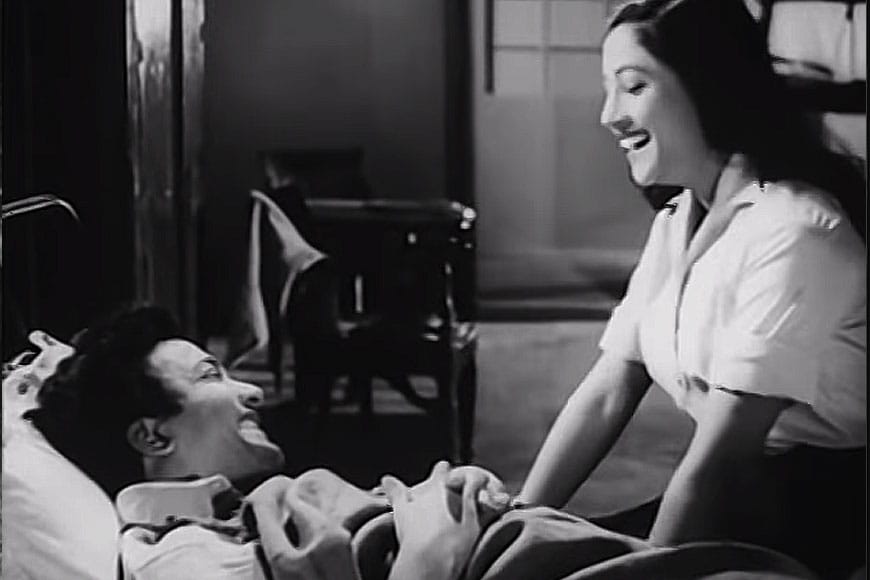
When people speak of Uttam Kumar and Suchitra Sen, they don’t just recall a screen pair. They recall an era. Few films capture their chemistry and cultural impact as vividly as Saptapadi, directed by Ajoy Kar in 1961. More than sixty years later, it continues to stir conversations about romance, identity, and the choices that shape human lives.
Saptapadi is set in the backdrop of 1940s Bengal. At its heart lies the love story of Krishnendu, a Hindu medical student (Uttam Kumar), and Rina Brown, an Anglo-Indian woman (Suchitra Sen). What begins as campus banter soon grows into deep affection. But the romance is never simply personal. It is shadowed by questions of community, tradition, and the politics of belonging in a pre-independence India. The title itself, Saptapadi, means “seven steps,” the ritual of marriage in Hindu tradition. By invoking this, the film immediately positions itself as a story about union and division—about what it takes for two people to walk together, and what pulls them apart.
Uttam Kumar brings Krishnendu alive with a mix of quiet strength and moral conflict. Suchitra Sen’s Rina Brown is magnetic: modern, poised, vulnerable. Together, they create a screen presence that Bengali cinema still reveres. Their interplay in the famous Ogo Aar Koto Raat Eka Thakbo sequence—set to Hemanta Mukhopadhyay’s haunting playback—remains one of the most cherished romantic moments in Indian cinema. Ajoy Kar understood restraint. He never allowed melodrama to overwhelm the narrative. The film moves with elegance, balancing romance with larger questions of identity and duty. The crisp editing, delicate use of light, and sharply written dialogues gave Saptapadi a sophistication rare for its time.
The film is based on Tarasankar Bandyopadhyay’s 1958 novel of the same name and is widely regarded as one of the greatest love stories in Bengali cinema. It was the highest-grossing Bengali film of 1961 and later featured in the “Homage Section” of the 45th International Film Festival of India.
The music, composed by Hemanta Mukherjee with lyrics by Gauriprasanna Mazumder, played a major role in the film’s enduring appeal. Hemanta lent his voice for Uttam Kumar’s songs, while Sandhya Mukherjee sang for Suchitra Sen. Their duet “Ei Path Jodi Na Sesh Hoy” remains one of the most iconic songs in Bengali film history.
What makes Saptapadi more than just a period romance is its refusal to offer easy resolutions. Love collides with tradition, and neither wins cleanly. It reflects a society in transition, where personal choice was often at odds with inherited identities. For audiences in the early 60s, the film’s conflicts were both familiar and daring. For later generations, it became a reminder of how cinema can mirror social realities while still being deeply poetic. Even today, when Bengali film lovers debate the best of Uttam-Suchitra, Saptapadi is always in the conversation. It represents a high point not just for the pair, but for Bengali popular cinema itself—proving that mass appeal and artistic depth don’t have to be enemies.