
India & World UpdatesHappeningsBreaking NewsFeature Story
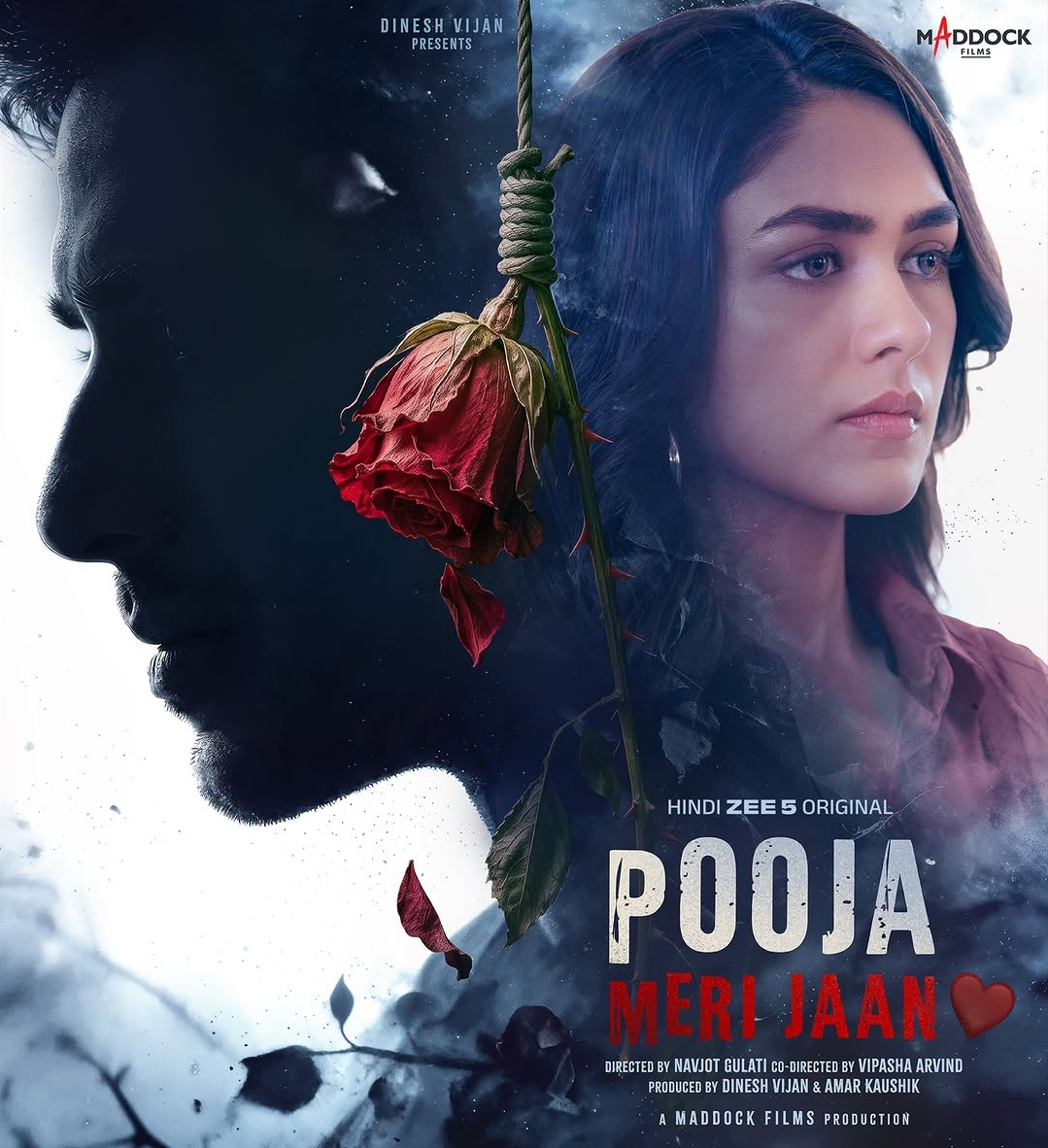
Pooja Meri Jaan: When ‘No’ Becomes a Crime, written by Shanku Sharma
// Shanku Sharma//
In a culture that still romanticises persistence and treats male heartbreak as high drama, Pooja Meri Jaan asks a blunt, uncomfortable question: What happens when a woman says no—and a man cannot accept it?
Directed by Navjot Gulati (with Vipasha Arvind as co-director) and produced by Dinesh Vijan and Amar Kaushik under Maddock Films, the Hindi drama finally premiered on Zee5 on 2 October 2026 after spending nearly four years in limbo. Shot in 2022, the film sat on the shelf amid shifting streaming deals and price negotiations before finding its home. Gulati has said he always believed a good film stands the test of time; the themes it confronts remain painfully current.
The Story
Pooja Dogra (Mrunal Thakur), a free-spirited theatre actor in Delhi, shares a long friendship with Aniket (Vikram Singh Chauhan). After a stage performance of Romeo and Juliet, Aniket publicly proposes. Pooja rejects him. Soon after, Aniket dies by suicide and leaves behind a message that points the finger at her.
What follows is a dual trial: one in the courtroom and one in the court of public opinion. Pooja is charged with abetment of suicide. Social media, Aniket’s grieving family, and a large section of society cast her as the callous woman who led a man on and then discarded him. Her friend and lawyer Sana (Huma Qureshi), a corporate lawyer with little criminal-court experience, steps in to defend her. On the other side stands Jatin (Vijay Raaz), a sharp, traditionalist prosecutor who channels collective outrage into legal argument.
The film deliberately presents conflicting versions of events. Viewers are forced to sit with ambiguity, question their own assumptions, and confront how quickly perception hardens into judgment.
Themes That Sting
At its core, Pooja Meri Jaan is about consent, entitlement, and the social cost of female agency. It examines how male obsession can be reframed as pure love, and how a woman’s refusal can be reframed as cruelty. The film echoes earlier works such as Pink and Article 375 but shifts the focus inward: the violence here is psychological and legal rather than purely physical. Aniket’s suicide becomes a form of emotional blackmail that society is willing to endorse.
Gulati has spoken about wanting to explore how men are often not taught to process rejection. The film does not let Aniket off the hook, nor does it paint Pooja as a flawless victim. She is complicated, sometimes abrasive, and fully human—exactly the kind of woman whose ‘no’ is most easily dismissed.
Performances
Mrunal Thakur carries the film with a layered, restrained performance. She refuses to make Pooja purely sympathetic or purely defensive; the character remains ambiguous enough that audiences must decide for themselves. Huma Qureshi brings quiet intensity and moral clarity as Sana, grounding the legal sequences. Vikram Singh Chauhan, in a difficult debut feature role, makes Aniket’s obsession feel sincere rather than cartoonish—an important choice that deepens the discomfort. Vijay Raaz, as ever, is compelling as the voice of patriarchal certainty.
Why It Matters
The four-year delay ironically underlines the film’s relevance. Conversations around consent, toxic masculinity, and trial by social media have only intensified. Pooja Meri Jaan arrives at a moment when many still struggle to accept that rejection is not a provocation, and that an adult’s decision to end their own life does not automatically transfer criminal or moral liability onto the person who said no.
It is not a perfect film—some critics have found the treatment more schematic than searching, and the courtroom rhetoric occasionally heavy-handed. Yet its central argument is clear and necessary: a woman’s right to refuse does not come with an obligation to manage another person’s emotional response, let alone their survival.
In an industry that still leans heavily on stories of one-sided devotion rewarded, Pooja Meri Jaan chooses the harder path. It insists that ‘no’ is a complete sentence—and that treating it as anything less is a form of violence society has normalised for far too long. Streaming now on Zee5.