
Barak UpdatesHappeningsBreaking NewsFeature Story
The Saga of a Dimasa village (Part 5 & last), written by Sanjib Deblaskar
//Sanjib Deblaskar//
6.
To come to other illustrious persons among the Dimasas, Purnendu Barman from Dhumkar is one among the teachers of Raja school, renowned for his passion for sports as for his excellence in teaching English. His enthusiasm on the playground was matched only by his dedication in the classroom, making him a favorite among students.
It’s a pleasure to recall Rukshini Barman of greater Barkhola, the political activist, in whose house I had the occasion to see (to read and take note of) the transmitted copy of Rashutsav Gitamrita, a sort of musical opera composed in high poetic language said to be an work of Maharaj Govindachandra for performance under royal patronage. This unique creation of the Hedemba court bears testimony to the level of literary and cultural attainment by the kingdom, a work not only reflects the intellectual vitality of the court but also stands as an enduring monument to the cultural heritage of the Dimasas embracing Vaishnavism following their matriarchal relation with the Manipur court.
7.
Umasashi Barman, daughter of Prakash Chandra Barman, originally hails from Ujan Nagar in Barkhola and is now settled in Silchar. A retired employee of the Posts and Telcom department, she is known for her literary and cultural accomplishments; she was offered special ovation by the Barak Upatyaka Banga Sahitya O Sanskriti Sanskriti Sammelan in 2024. She has rendered several important works of Ramakrishna–Vivekananda literature into the Dimasa language, which includes Advices of Sri Ramakrishna (with a biographical sketch), Advices of Swami Vivekananda, and Advices of Sri Sri Ma Sarada Devi.
Uttam Chand Barman, a distinguished son of greater Barkhola and a close relative of the renowned educationist Digamber Barman, the celebrated Headmaster of Raja School, has earned recognition as a historian of considerable merit. Although he served as a government officer, yet his enduring contribution lies in his scholarly writings on the history and heritage of the Dimasa people. Several well-researched books on Dimasa history stand to his credit. His family continues its association with public service and education; his daughter was married to a prominent educational administrator who served under the Government of Assam.
The village has produced many more notable sons and daughters. Among them are Prasenjit Barman, an accomplished bank officer, and Biswa Barman of Ujan Nagar, who retired from the Life Insurance Corporation of India after a distinguished career. The author also fondly remembers his childhood classmates—Papri, Krishna, Budhi, and Billa Ranjan in Raja school—whose companionship added colour and vitality to the village life. Nothing has been heard of Bipinjoy Barman of Ujan Nagar for a considerable length of time.
Mention must also be made of Samar Barman of Dhumkar, a keen sports enthusiast, his brother Dhruba, Gautam and Manmoth Barman, who served in the police force. Together they formed part of a generation that contributed to the character and spirit of the village. Paritosh Barman, a student of Dalu school, presently settled in upper Assam is a dedicated Nazrul researcher with a number of publication on Kazi Nazrul Islam received honour by the Nazrul Academi in West Bengal. Among the noteworthy personalities connected with Bijaypur through maternal lineage is Biswajyati Barman of Thaligram, presently settled in Silchar, son of the illustrious citizen Brojendra Narayan Barman. His mother Dwijendu Prabha was the daughter of Kulachandra, and his maternal uncle was Kuntal Barman. Biswajyoti’s grandmother, Damayanti Barman, also deserves special mention in this account. Such meaningful personal names, deeply rooted in the cultural traditions of the community, speak volumes about the rich heritage, literary awareness, and civilizational ethos of this great ethnic group. His auntie (Mashi) Gnanendu was married to Anil Chandra Barman in Dumkho (Dhumar).
It appears that the Dimasas, even in the remotest countryside, had exercised remarkable care in naming their children. Their personal names are seldom arbitrary; rather, they often embody cultural memory, moral aspiration, and a sense of continuity with a larger civilizational tradition.
The name Damayanti, for example borne by Biswajyoti’s grandmother, is a case in point. By all accounts, she was a successful daughter, wife, mother, and grandmother. The posterity is unlikely to remember her merely for any property she inherited or the influence she wielded during her lifetime. Instead, her name evokes the legendary Damayanti of Indian mythology, whose virtues, dignity, and devotion have inspired generations. In this sense, the name itself becomes a bridge between the individual and the collective cultural imagination.
Such names are therefore far more than matters of nomenclature. They are bearers of tradition, carriers of inherited values, and subtle markers of a community’s historical consciousness. Indeed, a careful examination of the proper names found within a Dimasa family often reveals the depth of its engagement with the wider cultural and mythological world of the Indian subcontinent. Through these names, one may discern not only familial affection and social identity but also the enduring presence of a rich and cultivated heritage.
To be back to Biswajyoti, an accomplished radio broadcaster in Silchar AIR, he rendered valuable service to the promotion and preservation of Dimasa art, culture, and heritage. He is also widely recognized as a distinguished researcher on Dimasa history and as a creative author of bilingual type, proficient in Bengali as well as in mother tongue. In recognition of his scholarly and literary contributions, he was awarded Anurupa Biswas Smriti honour in the 23rd Bi-enniel conference of Banga Sahitya held in Karimganj in 2024, and at the top of it he was awarded an honorary doctorate by the University of Gauhati.
Another eminent son of the community (though not directly connected with Bijaypur/Barkhola) is Mukul Ranjan Barman, who retired as Station Director of All India Radio. His contributions extended beyond the Dimasa community to the wider cultural life of the Bengalis of the Barak Valley. Deeply appreciative of traditional devotional music, particularly the agamani and arati songs associated with Durga Puja, he was drawn to Barkhola, where he undertook the recording of several such songs for broadcast through radio. These efforts played a significant role in preserving and popularizing a valuable segment of the region’s cultural heritage.
This account seeks to present picture of a lively Dimasa village that continues to haunt the memory of the people across the river, who shared their joys and sorrows, its festivals and their encounters with nature’s fury. Time and circumstances have inevitably brought change. The influence of semi-urbanism has left its imprint upon the village, and in many ways it now wears a quieter, more vacant appearance than before.
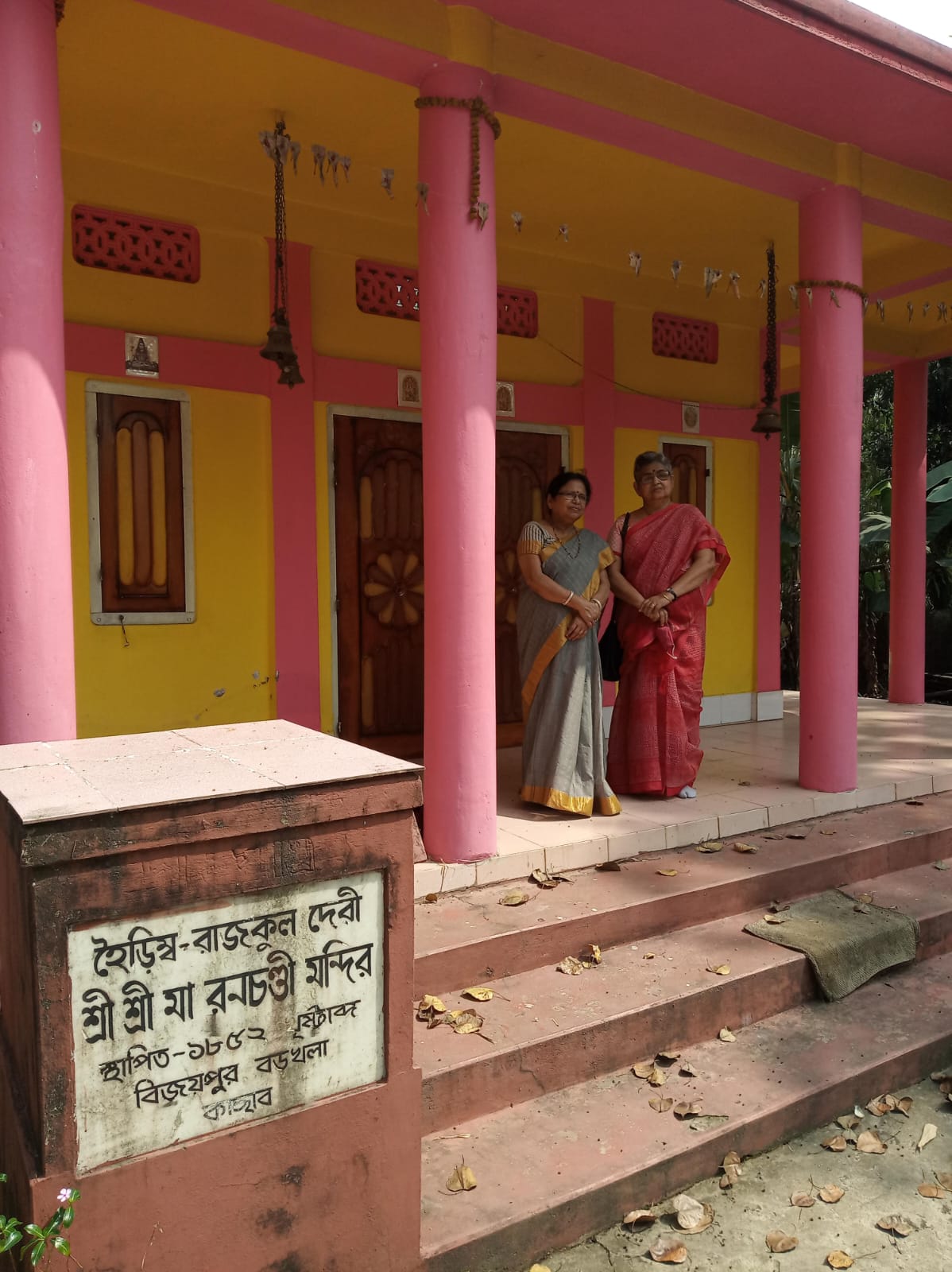
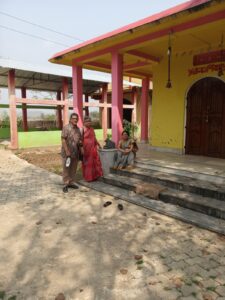
Yet the sight of children at play, mothers accompanying their little ones to and from school, and the ringing of the bell of Ranachandi temple —its echoes floating across the banks of the Jatinga and mingling with the sound from the temple of Nimata on the opposite shore still carry with them the fragrance of bygone days. In those sounds and scenes lives a tale of the past, preserved within the flow of time and carried forward into the future.
To conclude this tale, let me recount an anecdote. During the turbulent days preceding the Partition of India, the young Nalinindra Kumar sent to take up the case of Cacharis with Gopinath Bordoloi in the capital at Shillong. The Lokapriya asked him how many Kacharis would be affected should Cachar suffer the impending fate of Partition and how many, therefore, wished to avert such an outcome.
The spirited young fellow however, replied without hesitation that their number was ten thousand. Hearing this, the Lokapriya is said to have smiled rather skeptically and remarked, “Can such a small number hope to keep Cachar within the country?”
Nalinindra was quick with his answer. “Certainly, Sir;” he replied, “For one Cachari Barman is equal to one lakh men; multiply ten thousand by that measure, and the result will be immense.”
Whether apocryphal or true, the anecdote captures both the wit and the indomitable confidence of the future historian, as well as the determination of a small community that refused to regard numerical figure as the measure of its worth or influence.
…
… (some corrections in part I. Please see the corrected lines begin with —“Once a year some among them come to offer a platter of mairong (in place of jika) along with fruits– thailik, hontra, thaidima, thaiju , thaiflung ( banana, orange, small melon, mango, jackfruit)…”
Jika in Dimasa is not rice, it is past form of the verb ‘eat’. Cooked rice means “makham” and uncooked rice is “mairong” .
…
(This narrative contains no element of fiction or make-believe. If there are shortcomings, they lie only in possible understatement and inadvertent omission, never in overstatement.
The author was benefitted by his interaction with Sri Biswajyoti Barman, and with Smti Manali Longmailai as well, and by consultation of the scholarly works of Kh. Dhiren Singh, Profeesor, Department of Linguistics in Assam University, Silchar.)