
Barak UpdatesHappeningsBreaking News
Fresh Push for Barak Valley Bench Before Gauhati High Court
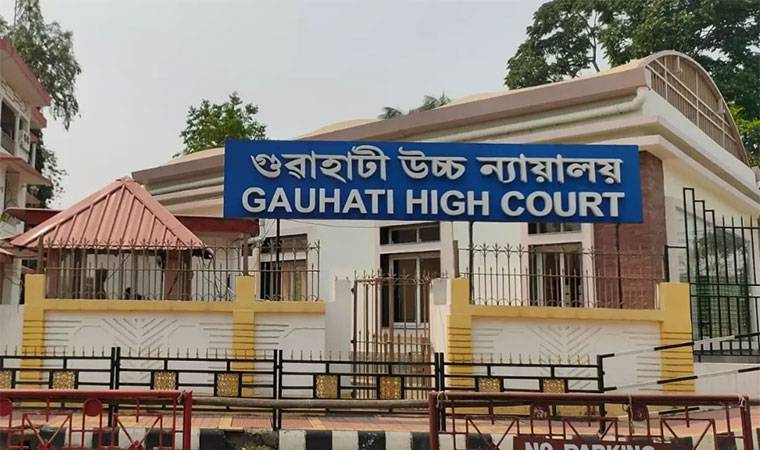
way2barak, May 6: Giving renewed momentum to the long-pending demand for a permanent High Court Bench in Barak Valley, a comprehensive additional memorandum spanning 112 pages has been submitted before the Hon’ble Chief Justice of the Gauhati High Court.
The submission, made by the High Court Bench Demand Implementation Committee, Cachar District Unit, Silchar, supplements its earlier memorandum dated January 12, 2026, and provides a detailed exposition of the systemic challenges faced by litigants from Barak Valley in accessing justice.
Through a data-oriented analysis, the memorandum highlights that litigants are routinely required to travel nearly 350 to 400 kilometres to Guwahati to approach the Gauhati High Court. This, it argues, creates a disproportionate burden on economically weaker sections, rural populations, and marginalized communities. The difficulties are compounded by recurring floods, landslides, and fragile transport and communication networks, which frequently disrupt court attendance and delay proceedings.
The representation invokes Articles 14 and 21 of the Constitution of India, asserting that the right to equality and life necessarily includes effective and meaningful access to justice. It further relies on jurisprudence of the Supreme Court of India advocating decentralization of judicial institutions to ensure equitable justice delivery.
It is noted that the Government of Assam has already sought the opinion of the Gauhati High Court, placing the issue within the domain of active administrative and judicial consideration. The present memorandum is therefore being viewed as a significant intervention at a critical stage.
Tracing the history of the demand, the memorandum refers to its discussion in the Lok Sabha on May 22, 2012 under Rule 377, as well as a statement made in the Rajya Sabha on January 3, 1991 by then Union Law Minister Subramanian Swamy.
The demographic dimension has also been emphasized, noting that the districts of Cachar, Sribhumi, and Hailakandi together account for around 4.5 million people, increasing to approximately 4.75 million when Dima Hasao is included, thereby underscoring the magnitude of the issue.
Comparative reliance has been placed on the establishment of a Bench of the Calcutta High Court at Jalpaiguri, where decentralization was undertaken to address similar concerns of distance and access.
The memorandum has been signed and submitted on behalf of the Committee by senior advocate Dharmananda Deb. It has also been dispatched separately through speed post to the Hon’ble Chief Justice of the Gauhati High Court, with copies forwarded to all Members of the Administrative Committee for consideration.
In support of its legal foundation, the memorandum relies on the decision in Anita Kushwaha v. Pushap Sudan, (2016) 8 SCC 509, wherein the Hon’ble Supreme Court of India recognized access to justice as a fundamental right under Articles 14 and 21 of the Constitution of India, encompassing accessibility, affordability, expeditious adjudication, and effective adjudicatory mechanisms.
The memorandum also recounts earlier administrative consideration of the issue. It notes that on 15.02.2014, the Judicial Department of the Government of Assam forwarded a proposal to the Gauhati High Court under the North-Eastern Areas (Reorganisation) Act, 1971 seeking establishment of a Bench in Barak Valley. The proposal was examined by the Administrative Committee on 10.11.2014 and was found not feasible at that stage, a position later affirmed by the Full Court on 30.03.2015.

However, the present memorandum stresses that the situation has substantially evolved since then, pointing to improved infrastructure, enhanced connectivity, increased case load, and persistent public demand from Barak Valley and Dima Hasao.
Reliance is also placed on the recent ruling of the Hon’ble Supreme Court of India in Ranjeet Baburao Nimbalkar v. State of Maharashtra (2025 INSC 1460), wherein it was observed that administrative decisions are not static and may be revisited as circumstances change. The Court clarified that such decisions are taken in trust for the institution, and earlier determinations do not create a bar or estoppel against reconsideration by a successor authority, provided the decision is bona fide and based on legitimate considerations.
In light of these developments, the memorandum urges a fresh evaluation of the proposal for establishing a permanent Bench of the Gauhati High Court in Barak Valley, contending that the present conditions justify reconsideration in the interest of ensuring effective access to justice.
With the issue now under active consideration and supported by evolving legal and factual grounds, observers indicate that the matter has entered a decisive phase, potentially advancing the long-standing demand towards resolution.