
NE UpdatesBarak UpdatesBreaking News
The Saga of a Dimasa village (Part 2), written by Sanjib Deblaskar
//Sanjib Deblaskar //
2.
… loveliest village of the plain,
Where health and plenty cheered the labouring swain,
Where smiling spring its earliest visit paid,
And parting summer’s lingering blooms delayed,
Dear lovely bowers of innocence and ease,
Seats of my youth, when every sport could please,
How often have I loitered o’er thy green,
Where humble happiness endeared each scene!
–The Deserted Village, Oliver Goldsmith
…
The author’s first reflection on reaching the village was one of melancholy and dejection: Oh, my beloved land, where we spent the happiest years of our life! Where has its enchantment gone? Where are the friends with whom we shared our childhood and youth? Where are the elders whose wisdom have guided us? Where are the young ones whose laughter echoed across the fields and riverbanks?
One by one they have all departed—some to distant towns and cities, some to other worlds from which no traveler returns. The houses still stand, the river still flows, and the hills still keep watch from afar, yet the spirit that once animated this place seems to have vanished.
What remains is only a shadow of the village you had known. It has become a lifeless place, haunted by memories and silences.
It was indeed a blissful abode of a number of simple people carrying love and only love in their bosom. How exhilarating are the names of the people who are no more: Nakulram Barman, Sampurna Barman, Jagna Barman, Prakash Barman, Pulin Barman, Suresh Barman, Kalisaday Barman; and at the top of it the name of Nandalal Barman linger in the faint memory who lived in and around the area, and in the villages Dhumkar, Ujan Nagar, Barband, Dalu, Rampur, Gorerbhitar, and of course, Bijaypur in greater Barkhola under the auspice of Ranachandi and Nimata Temple.
Story has it that one among the Dimasa ranis had resided for some time at Dhumkar, on the western bank of Jatinga, a village named after a female member of the royal family, Dhumkarai. According to local tradition, her stay in the village followed several years of sojourn at Barjatrapur, Ranighat, and Rajghat after the assassination of King Govindachandra at Haritikar. Legend has it that, anticipating an attack on the temporary capital, the king had sent the Ranee to Jatrapur—later known as Raninagar or Ranighat—for safety. It is further said that the royal deity, Ranachandi, represented in the form of a sacred sword, was conveyed there for her daily worship. Centuries later, that revered relic had travelled from Ranighat to Bijaypur. The entire narrative remains enveloped in a veil of myth, memory, and local legend, where history and folklore intertwine in fascinating ways.
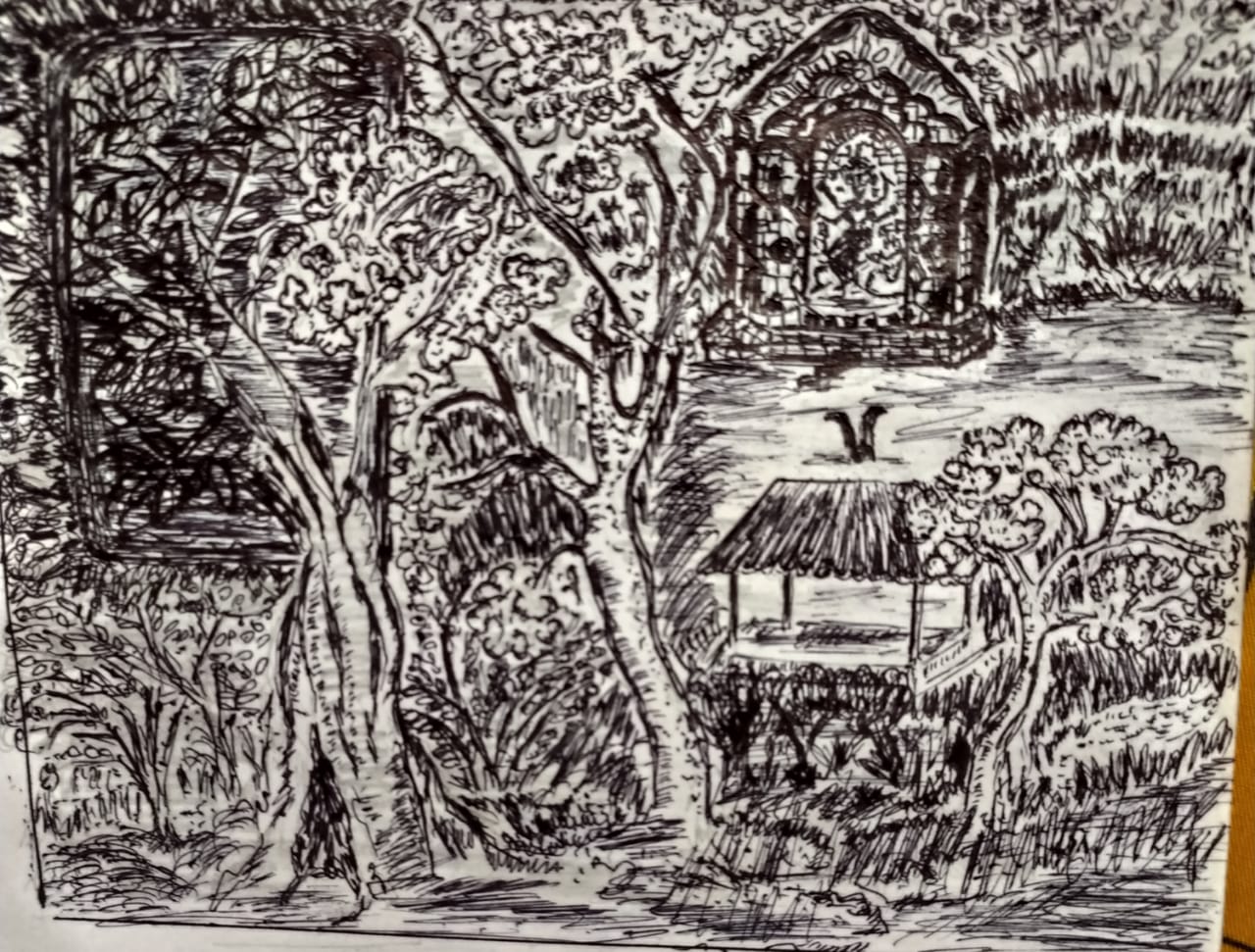
(Nimata temple, Bijaypur century ago– conceived imaginatively by Sanjoy Deblaskar)
)