
Barak UpdatesAnalytics
“Memory is Mechanized today”: Prof Joya Chakraborty Explores Algorithmic Power at the 30th year Celebration Event of the Dept. of Mass Com, AUS
Returning to her alma mater, the eminent media scholar warned against platform monopolies, AI exploitation, and the erosion of human context in digital newsrooms.
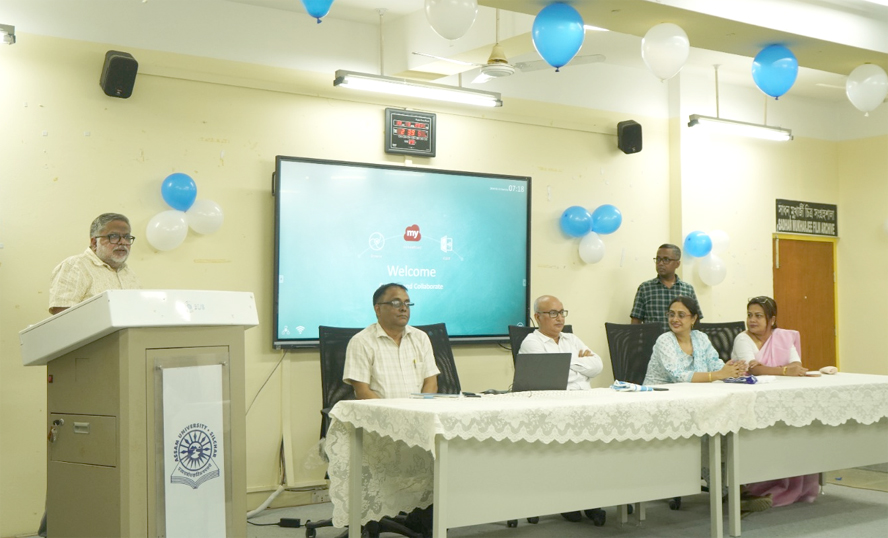
Way2barak, August 14 : In a memorable homecoming that marked three decades of media education at Assam University, renowned scholar Prof. Joya Chakraborty delivered the 2nd Special Lecture in the department’s ongoing 30th-anniversary celebration series.
Addressing a packed seminar hall decorated with colorful balloons and celebratory displays arranged by enthusiastic students, Prof. Chakraborty—currently with the Department of Mass Communication & Journalism at Tezpur University—spoke on “From the newsroom to algorithm: communication, power and society in a changing world.”
The landmark lecture followed the series opener delivered online in February by internationally acclaimed media scholar Prof. Daya Thussu.
Digital Silence and “Mechanized Memory”
Tracing the evolution of media from print, radio, and television to social platforms and artificial intelligence, Prof. Chakraborty emphasized how digital tools have redefined traditional human interaction.
“Silence communicates.” — Prof. Joya Chakraborty
In her address, she noted that modern digital markers of silence—such as muted chats, unanswered messages, missing blue ticks, ghosting, and benching—are no longer passive absences of sound. Instead, they operate as potent non-verbal signals that deeply influence self-esteem, social judgment, and interpersonal relationships.
Probing the shift in human experience, Prof. Chakraborty observed that memory itself has undergone a profound transformation.
“Memory has become mechanized.” — Prof. Joya Chakraborty
Where pre-digital memory was oral, private, and situational, today’s digital environment turns lived moments into capturable, storable, and commercialized public data. She warned that such digitization often decontextualizes sacred, indigenous practices—such as ethnic rituals from Northeast India—when uploaded to platforms like YouTube and Instagram without community control.
AI, Exploitative Data Labor, and Newsroom Ethics
Prof. Chakraborty cautioned media students against over-reliance on automated newsroom tools, pointing out the hidden inequities behind modern tech platforms:
● Centralized Monopoly: AI tools and platform algorithms concentrate power within tech giants while relying on low-paid, invisible data labor in developing nations.
● Loss of Sender Control: Traditional communication models like SMCR (Source-Message-Channel-Receiver) are disrupted by unseen data collectors intervening between the source and the audience.
● The Imperative for Journalists: Automation cannot substitute for core human journalism—specifically verification, ethical sensitivity, and contextual judgment. Without these, traditional journalistic skill sets risk becoming obsolete within years.
She added that despite platform centralization, younger generations and social movements continue to deploy the same tools to build counter-narratives and redistribute communicative influence.
Decades of Legacy: Tributes and Academic Synthesis
Presiding over the event, Head of the Department Prof. Charvak conducted the meeting and delivered a comprehensive synthesis of the lecture. He highlighted how Prof. Chakraborty’s insights re-examined foundational media theories, dissected the centralizing power of algorithmic platforms, and underscored the crucial balance between technological speed and human ethics.
The gathering brought together key figures from the department’s history:
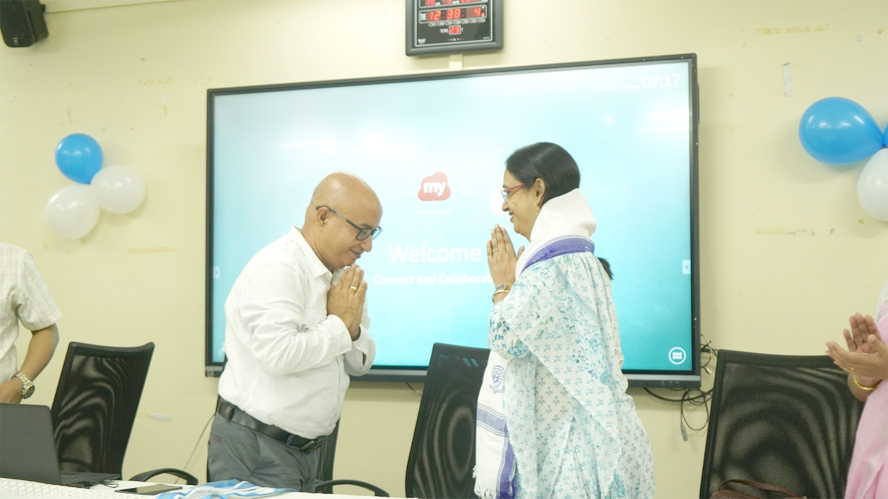
● Prof. Nirmal Kanti Roy, Dean of the Abanindra Nath Tagore School of Creative Arts & Communication Studies, formally felicitated Prof. Chakraborty, fondly recalling their student days together as contemporaries.
● Prof. Partha Sarkar, former Head of Department and a member of its pioneer student batch, offered a retrospective on the department’s early years and praised Prof. Chakraborty as its most illustrious alumna who has achieved international academic standing.
● Prof. Paromita Das delivered the vote of thanks, noting that as a fellow alumna, the lecture offered a nostalgic journey alongside an incisive evaluation of the discipline. She expressed sincere gratitude to Honorable Vice Chancellor Prof. Rajive Mohan Pant for his constant guidance and support in organizing the session, while applauding the students for creating a festive ambiance in the hall.
The session concluded with an energetic Q&A round where scholar P. Dinamani Singha, students Anamika, Deblina Roshni, Adnan and Sabera engaged Prof. Chakraborty on newsroom automation, digital power dynamics, and media ethics.