
Barak UpdatesHappeningsBreaking NewsFeature Story
Communal Polarization and Social Tension: When Politics, Identity, and Power Redefine the Nation, written by Dr. Manoj Kumar Paul

//Dr. Manoj Kumar Paul//
(Former Principal, Women’s College, Silchar, Assam)
Communal polarization is neither an accidental nor a spontaneous social phenomenon; rather, it is a long-term, complex, and structurally embedded process shaped by political narratives, economic anxieties, cultural symbols, and digital technologies. Differences of religion, language, and culture are natural and have historically served as the foundation of coexistence. However, when these differences are deliberately framed through the language of fear, suspicion, and competition, they begin to erode social trust and destabilize the equilibrium of coexistence.
In contemporary India, this process has evolved into a deeply entrenched political and social reality. Polarization is no longer confined to isolated episodes of conflict; it now permeates political competition, media discourse, institutional behavior, and even personal relationships. Consequently, the idea of citizenship—once grounded in equality and rights—is increasingly being redefined through the lens of identity. In this context, communal polarization must be understood not merely as a political strategy, but as a multidimensional social crisis.
Global Context and Historical Roots of Communal Polarization

Communal polarization is not unique to any single nation; it is a recurring global phenomenon. During the colonial period, policies of “divide and rule” intensified religious, linguistic, and ethnic divisions in many societies. In the Indian subcontinent, this was most tragically reflected in the Partition, where political decisions transformed social divisions into large-scale violence.
In European history, nationalism has functioned both as a force for liberation and as a mechanism for enforcing cultural homogeneity. The ethnic conflicts of the twentieth century—particularly in the Balkans—demonstrate the dangers of constructing states based on singular identities. In Africa, colonial boundaries laid the foundation for ethnic conflicts that later intensified through political competition. In the Middle East, religious divisions intertwined with geopolitics have produced prolonged instability.
In the contemporary era, digital technology has amplified these tendencies. Social media platforms transcend geographical boundaries, enabling the rapid spread of divisive narratives. Misinformation, conspiracy theories, and emotionally charged content contribute to similar patterns of polarization across societies.
However, history also offers pathways to resolution. Post-apartheid South Africa’s Truth and Reconciliation Commission illustrates how institutional strength and ethical leadership can address deep social divisions. These examples demonstrate that polarization is not inevitable; it is shaped by political and social choices.

Theoretical Framework: Sociological Foundations of Polarization
Understanding communal polarization requires engagement with key theoretical perspectives.
Social Identity Theory (Henri Tajfel) explains how individuals categorize themselves into groups, leading to the formation of “in-groups” and “out-groups.” This often results in favoritism toward one’s own group and hostility toward others.
Relative Deprivation Theory (Ted Gurr) highlights how perceived deprivation—rather than absolute conditions—generates frustration and conflict, making populations vulnerable to mobilization.
Scapegoat Theory explains how complex social and economic problems are attributed to specific groups, diverting attention from structural causes.
Noam Chomsky’s concept of “Manufacturing Consent” illustrates how media and power structures shape public opinion, often reinforcing dominant narratives.
Together, these frameworks reveal that communal polarization is not merely emotional; it is systematically produced and sustained.
Political Economy and the Rise of Identity Politics:
The relationship between economic conditions and identity-based politics is both structural and strategic. Periods of economic distress—marked by unemployment, widening inequality, and declining social mobility—often generate collective frustration, particularly among youth and marginalized groups. In such contexts, complex structural problems become difficult to address through immediate policy solutions. Political actors, therefore, find it more expedient to translate these anxieties into simplified, emotionally resonant narratives.
Identity becomes a powerful instrument in this process. By framing economic hardship as the result of competition from a particular community, political discourse shifts attention away from systemic issues such as policy failure, institutional inefficiency, or global economic pressures. This redirection is not accidental; it transforms diffuse dissatisfaction into targeted grievance, making mobilization faster and more cohesive.
As identity-based mobilization gains prominence, substantive policy debates are gradually displaced. Issues like education, healthcare, and employment lose visibility, replaced by symbolic gestures and cultural assertions. Politics becomes increasingly performative, where emotional validation takes precedence over governance outcomes. This shift weakens democratic accountability, as electoral success becomes tied to identity affirmation rather than public welfare or policy effectiveness.
Contemporary Political Behavior and Institutionalization of Polarization
In contemporary India, communal polarization is not merely episodic but embedded within a broader pattern of political behaviour that spans across ideological divides. The formation exercising national executive authority plays a decisive role in shaping public discourse. Through symbolic assertions, selective interpretations of history, and emotionally charged narratives, identity is increasingly positioned as a primary marker of citizenship. From such positions of power, even rhetorical signals carry institutional weight, influencing bureaucratic conduct, law enforcement priorities, and broader social norms.
Simultaneously, political formations positioned as alternatives often exhibit calibrated ambiguity. While formally upholding constitutional principles such as secularism and pluralism, they may adopt strategic silence or cautious positioning during moments of communal tension. This reflects an electoral calculus in which overt moral clarity is perceived as politically costly in polarized environments.
At the regional level, responses vary significantly. Some state governments attempt to counter polarization through inclusive governance and welfare-oriented policies, while others adapt identity-based mobilization to local socio-political contexts. Collectively, these patterns suggest that polarization persists not because it is inevitable, but because existing electoral incentives reward emotional consolidation over policy-driven governance, thereby normalizing divisive political strategies.
Media, Algorithms, and the Politics of Information
In the digital era, the media ecosystem has undergone a profound transformation, fundamentally altering how information is produced, circulated, and consumed. Algorithm-driven platforms prioritize engagement over accuracy, ensuring that users are predominantly exposed to content that aligns with their pre-existing beliefs. This creates “echo chambers,” where alternative perspectives are minimized, and confirmation bias is reinforced.
In a country like India, with over 800 million internet users, the scale and speed of information dissemination are unprecedented. Messaging platforms and social media networks facilitate rapid circulation of content, often without adequate verification. Rumors, doctored visuals, and selectively framed narratives can spread widely within minutes, sometimes triggering real-world consequences such as panic, mistrust, or even localized violence.
This environment blurs the distinction between information and propaganda. Emotional appeal often outweighs factual accuracy, as content designed to provoke fear or outrage receives higher visibility. As a result, information no longer merely reflects reality; it actively constructs it by shaping perceptions, reinforcing stereotypes, and influencing political attitudes.

In such a context, media literacy and platform accountability become crucial. Without them, the politics of information risks deepening societal divisions and undermining informed democratic participation.
Institutional Structures and Democratic Crisis
Democratic institutions function effectively only when they are perceived as impartial, transparent, and accountable. Public trust is not an automatic outcome of constitutional design; it is built through consistent, fair, and credible performance. However, when key institutions—such as the judiciary, civil administration, regulatory bodies, and educational systems—are perceived to be influenced by political or ideological considerations, their legitimacy begins to erode.
This erosion gives rise to what is often termed an “institutional trust deficit.” Citizens begin to question not only decisions but the neutrality of the decision-making process itself. In plural societies, where institutional fairness acts as a critical safeguard against discrimination, such perceptions can intensify social tensions and deepen polarization.

The educational system plays a particularly significant role in this context. When curricula simplify historical complexities or discourage critical inquiry, they contribute to the normalization of divisive narratives among younger generations. Instead of fostering analytical thinking and democratic values, education risks reinforcing one-dimensional perspectives.
Over time, weakened institutions and compromised education systems create a reinforcing cycle. Citizens lose confidence in governance structures, while the capacity to critically evaluate political narratives declines. This dual crisis poses a serious challenge to the sustainability of democratic norms and the preservation of social cohesion.
Institutional Decline and the Crisis of Education
In any democratic society, the credibility and neutrality of institutions constitute the backbone of governance and public trust. Institutions such as the judiciary, civil administration, electoral bodies, and educational systems derive their legitimacy not merely from constitutional design but from consistent adherence to principles of fairness, transparency, and accountability. However, when these institutions begin to deviate from perceived neutrality—whether through political interference, selective enforcement, or erosion of procedural integrity—a profound “institutional trust deficit” emerges.

This deficit does not remain confined to formal governance structures; it gradually permeates public consciousness. Citizens begin to question not only decisions but the intent behind them. In such an environment, law loses its moral authority and is seen as contingent rather than universal. This perception is particularly dangerous in plural societies, where institutional impartiality acts as the primary safeguard against majoritarian excess and minority insecurity.
The crisis becomes more complex when linked with the transformation of education. Education is not merely a system of knowledge transmission; it is a process through which societies reproduce values, norms, and critical faculties. When educational spaces shift from inquiry-based learning to ideological reinforcement, they risk becoming instruments of cognitive conditioning rather than intellectual development.
One major concern is the decline of critical thinking. The dominance of rote learning, standardized testing, and outcome-oriented pedagogy limits the ability of students to engage with complexity. Social realities—especially those involving identity, inequality, and historical conflict—require analytical depth. Without exposure to multiple perspectives, students may internalize simplified narratives that reinforce binary thinking.
Another dimension is the “hidden curriculum”—the implicit messages conveyed through textbooks, institutional culture, and pedagogical choices. Even when not explicitly stated, biases in representation, selective historical emphasis, or exclusion of certain voices shape students’ worldview. The political rewriting or selective presentation of history can normalize division by privileging certain identities over others, thereby embedding polarization within generational consciousness.
Higher education institutions, traditionally spaces of debate and dissent, are also increasingly subjected to ideological scrutiny. Restrictions on academic freedom, surveillance of intellectual discourse, and pressures to conform to dominant narratives weaken the university as a site of democratic engagement. When dissent is delegitimized within educational spaces, society at large loses a crucial arena for negotiation and dialogue.
Thus, institutional decline and educational crisis are mutually reinforcing. Weak institutions fail to protect intellectual autonomy, while compromised education systems produce citizens less capable of defending democratic values. Together, they create a cycle in which polarization is not only sustained but normalized.
Social and Psychological Consequences
The most enduring and perhaps most insidious effects of communal polarization manifest not in formal politics but in the everyday fabric of social life. Social cohesion depends on trust, mutual recognition, and the ability to coexist despite differences. Polarization systematically erodes these foundations, replacing them with suspicion, distance, and emotional fragmentation.
At the community level, relationships that were once defined by proximity and shared experience begin to acquire ideological undertones. Neighborhoods become segregated not only physically but psychologically. Ordinary interactions—buying food, attending festivals, participating in local events—are reinterpreted through the lens of identity. The everyday becomes politicized.
For minority communities, this often translates into a persistent sense of vulnerability. Even in the absence of direct violence, the anticipation of discrimination or misrepresentation generates chronic psychological stress. This can lead to withdrawal from public spaces, reduced civic participation, and a weakening of democratic engagement. Over time, such marginalization becomes self-reinforcing.
For majority communities, polarization often produces what may be termed a “manufactured insecurity.” Despite structural advantages, constant narratives of threat create a perception of being under siege. This perception justifies exclusionary attitudes and defensive aggression, further deepening division. Thus, both majority and minority experiences are shaped by distorted realities—one of fear, the other of anxiety.
At the psychological level, prolonged exposure to polarized narratives alters cognitive and emotional processes. Confirmation bias becomes stronger; individuals seek information that reinforces existing beliefs and reject contradictory evidence. Empathy declines, as out-groups are increasingly dehumanized or stereotyped. Moral disengagement allows individuals to justify actions or attitudes that would otherwise be unacceptable.
Another critical dimension is emotional fatigue. Constant exposure to conflict, outrage, and fear creates a sense of exhaustion. Citizens become desensitized to incidents of violence or discrimination. What once evoked collective concern gradually becomes normalized. This normalization is perhaps the most dangerous outcome, as it erodes society’s capacity for moral outrage and collective action.
Intergenerational transmission further complicates the issue. Children growing up in polarized environments internalize division as a natural condition. Prejudices are not learned through formal instruction alone but through observation, language, and social cues. Thus, polarization reproduces itself across generations, making resolution increasingly difficult.

Ultimately, the social and psychological costs of communal polarization extend beyond visible conflict. They reshape how individuals perceive reality, interact with others, and understand their place within society. The damage, though often invisible, is deeply structural and long-lasting.
Future Crisis: Toward a New Social Breakdown
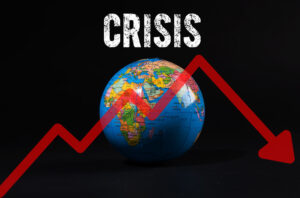
If current trajectories remain unaddressed, communal polarization is likely to produce a series of interconnected crises that could fundamentally alter the nature of democratic society. These crises are not hypothetical; they are extensions of existing trends, intensified over time.
First, the democratic framework itself may undergo a gradual hollowing out. Elections may continue to occur regularly, but their substantive character could change. Instead of serving as mechanisms for policy choice and accountability, they risk becoming referendums on identity. Political competition may shift from governance performance to symbolic dominance, weakening the very purpose of representative democracy.
Second, the normalization of low-intensity conflict could escalate into recurrent social unrest. Small incidents—often triggered by misinformation or localized disputes—may rapidly acquire communal dimensions. The frequency of such conflicts could increase, straining law enforcement and judicial systems. Over time, society may adapt to a baseline level of instability, reducing incentives for long-term peacebuilding.
Third, economic consequences are likely to be severe. Social division undermines investor confidence, disrupts local economies, and reduces productivity. In a polarized environment, cooperation across communities becomes difficult, affecting labor markets, entrepreneurship, and innovation. Public resources may increasingly be diverted toward managing conflict rather than promoting development.
Fourth, demographic and spatial segregation may intensify. Communities may increasingly cluster along identity lines, leading to the formation of socially homogeneous enclaves. While such segregation may reduce immediate friction, it deepens long-term division by limiting interaction and reinforcing stereotypes.
Fifth, the international implications cannot be ignored. In an interconnected world, domestic instability affects global perception. A nation perceived as internally divided may face challenges in diplomacy, trade negotiations, and strategic partnerships. Soft power—often derived from cultural pluralism and democratic credibility—may weaken significantly.
Finally, there is the risk of moral erosion. As polarization becomes entrenched, society may gradually lose its ability to distinguish between ethical and expedient choices. Violence, discrimination, and exclusion may be justified in the name of identity or security. This erosion of moral standards poses perhaps the greatest long-term threat, as it undermines the ethical foundation of collective life.
Thus, the future crisis of communal polarization is not a single event but a cumulative process. It involves the weakening of institutions, fragmentation of society, distortion of democracy, and erosion of moral values—all reinforcing one another in a potentially irreversible cycle.
10. Pathways to Resolution: Policy, Ethics, and Citizenship (Expanded)
Addressing communal polarization requires a comprehensive and sustained approach that operates simultaneously at political, institutional, social, and individual levels. Piecemeal interventions or reactive measures are unlikely to produce lasting change. Instead, what is needed is a structural realignment of incentives, norms, and practices.
At the political level, accountability must be strengthened. Electoral systems should incentivize governance performance rather than identity mobilization. This may involve reforms in campaign finance transparency, stricter regulation of hate speech, and independent monitoring of electoral conduct. Political parties, irrespective of ideology, must be held to consistent standards of ethical communication.
Institutional reform is equally critical. The independence and credibility of constitutional bodies must be reinforced through transparent appointment processes, fixed tenures, and robust oversight mechanisms. Institutions must not only be impartial but also be perceived as such. Public trust is as much about perception as it is about reality.
Media reform represents another essential dimension. In an age of digital communication, information ecosystems shape public consciousness. Strengthening public-interest journalism requires financial independence, editorial autonomy, and legal protection from political pressure. At the same time, digital platforms must be made accountable for the content they amplify. Algorithmic transparency, fact-checking mechanisms, and content moderation policies are crucial in limiting the spread of misinformation.
Education offers perhaps the most transformative potential. Curriculum reform should emphasize critical thinking, ethical reasoning, and constitutional values. Students must be exposed to multiple perspectives and encouraged to question rather than merely absorb information. Civic education should foster dialogue, empathy, and respect for diversity. Universities must remain spaces of intellectual freedom, where dissent is not suppressed but engaged with constructively.
Economic policy must address the root causes of insecurity. Inclusive growth, job creation, and equitable access to resources reduce the appeal of divisive narratives. Social security systems can provide stability in times of uncertainty, preventing economic anxiety from translating into social hostility.
At the community level, initiatives that promote interaction across identities are essential. Shared public spaces, inclusive urban planning, and local dialogue platforms can rebuild trust. Civil society organizations, cultural institutions, and grassroots movements play a vital role in facilitating such engagement.
Legal frameworks must ensure swift and impartial justice in cases of hate speech, discrimination, and violence. Accountability—applied consistently—signals that citizenship, not identity, is the basis of rights and protection.
Finally, the role of citizens cannot be overstated. Citizenship is not merely a legal status; it is an ethical practice. Individuals must actively resist simplification, question divisive narratives, and engage with difference constructively. Moral courage at the individual level often precedes structural change.
In essence, the resolution of communal polarization lies in reimagining the relationship between politics, society, and citizenship. It requires moving from a framework of competition and exclusion to one of cooperation and inclusion. While the challenge is complex, it is not insurmountable. History demonstrates that societies can overcome division when guided by ethical leadership, institutional integrity, and an engaged citizenry.
Conclusion

Communal polarization is not an inevitable outcome of diversity but the result of sustained political, economic, and informational processes that reshape how societies understand identity and belonging. As this essay has shown, its roots lie in electoral incentives, economic anxieties, institutional weaknesses, and the transformation of media ecosystems. Together, these forces normalize division, weaken democratic accountability, and erode social trust.
Yet, the persistence of polarization does not imply permanence. Its constructed nature also makes it reversible. Strengthening institutional integrity, promoting inclusive economic growth, ensuring responsible media practices, and nurturing critical, value-based education are essential steps toward restoring balance. Equally important is the role of citizens in resisting simplified narratives and engaging with diversity through empathy and reason.
Ultimately, the future of any democratic society depends on whether identity remains a tool of division or citizenship re-emerges as the foundation of collective belonging. The choice is not merely political—it is profoundly moral and will shape the character of society for generations to come.