
India & World UpdatesHappeningsBreaking News
Centre issues detailed protocol for rendition of Vande Mataram
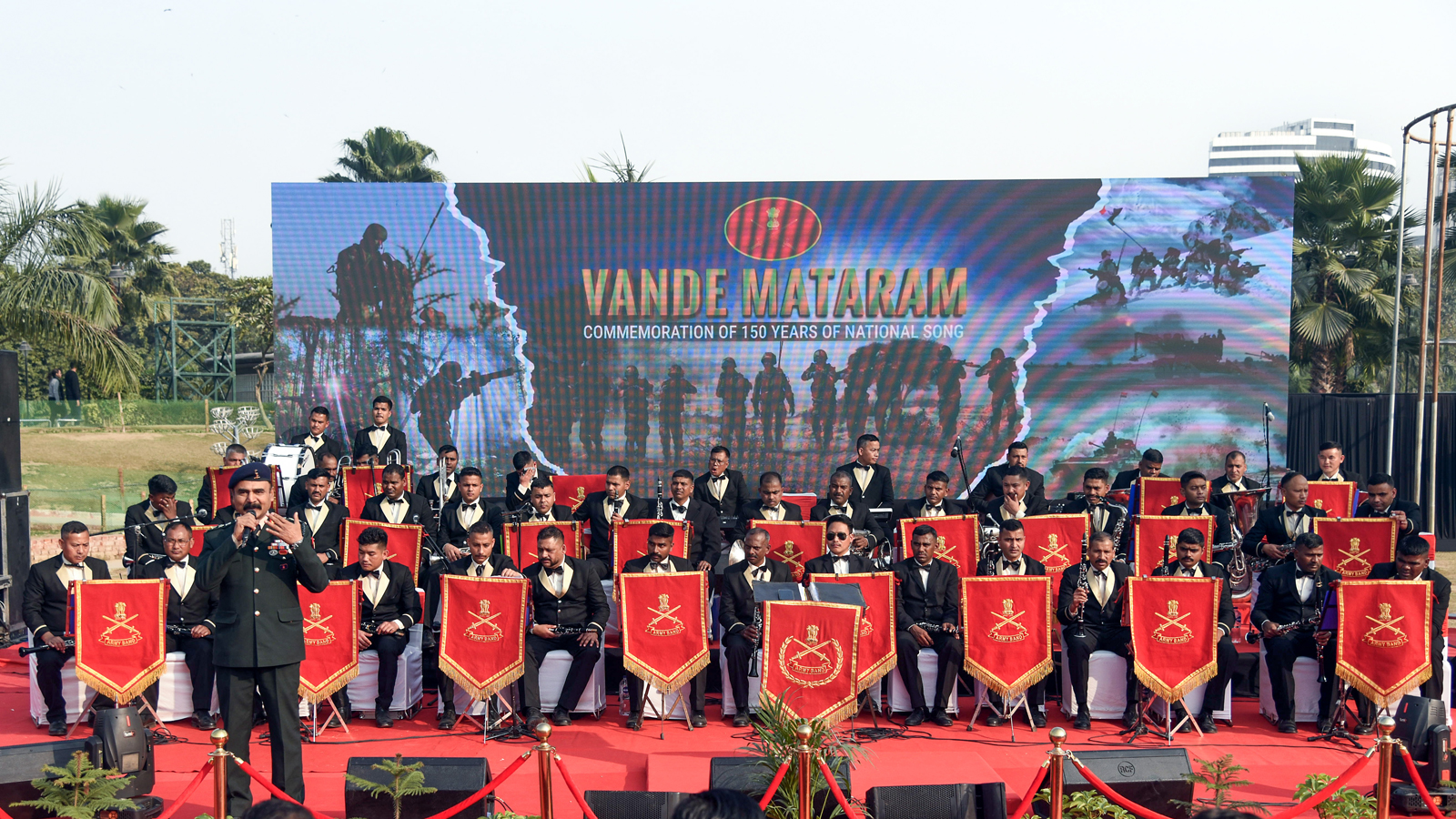
way2barak Feb 11: The Modi government’s decision to revise the national song, Vande Mataram, as adopted by the Constituent Assembly, has triggered a political row again, with the Opposition accusing the Bharatiya Janata Party (BJP) of “rewriting history” with an eye on the West Bengal elections.
In a 10-page order, issued to all states and union territories on 28 January, the Ministry of Home Affairs (MHA) released the “official version” of the song written by Bengali novelist-poet Bankim Chandra Chatterjee. The official version includes the four stanzas that the poet had added to his original two-stanza soliloquy but which were not included in the song adopted by the Constituent Assembly.
The Congress had dropped these lines, which appeared in Chatterjee’s novel Anandmath, in 1937 following objections by the Muslim League to idolatrous references. On 24 January 1950, the Constituent Assembly had adopted the truncated version, which left out four stanzas with references to Hindu goddesses Durga, Lakshmi and Saraswati.
During the Lok Sabha discussion on the national song on its 150th anniversary in December last year, Prime Minister Narendra Modi had slammed India’s first prime minister Jawaharlal Nehru for coming under pressure of Muhammad Ali Jinnah. He had also criticised the Congress for truncating Chatterjee’s song, saying that this “betrayal” sowed the seeds of Partition.
Back then, former BJP president J.P.Nadda argued that the national song should be accorded the same status as the national anthem and national flag. The Congress countered saying that the BJP’s emphasis on Vande Mataram was politically motivated, aimed at consolidating support ahead of elections in West Bengal.
The MHA order has mandated the complete six-stanza version, lasting 3 minutes and 10 seconds. Under the new rules, the national song must be played at civil investitures, presidential and gubernatorial arrivals and departures at state functions, before and after presidential addresses to the nation, and when the national flag is paraded.
The order states that when both the national song and anthem are played together, Vande Mataram will be played first, with everyone required to stand at attention.
Cinema halls have been exempted from the new requirements. The order states that screening Vande Mataram in theatres before films is not mandatory, a clarification that prevents a repeat of the Supreme Court directives on the national anthem in 2016.
At schools, the day’s work may begin with community singing of the national song, and authorities should make adequate provision for popularising it alongside the national anthem and respect for the national flag, according to the order.
The guidelines do not apply to private functions or non-governmental events. The mandatory requirement extends only to official government programmes, state schools, and formal occasions involving constitutional functionaries.