

Barak UpdatesHappeningsBreaking News
Cachar Administration rolls out comprehensive roadmap for Bhuban Mela
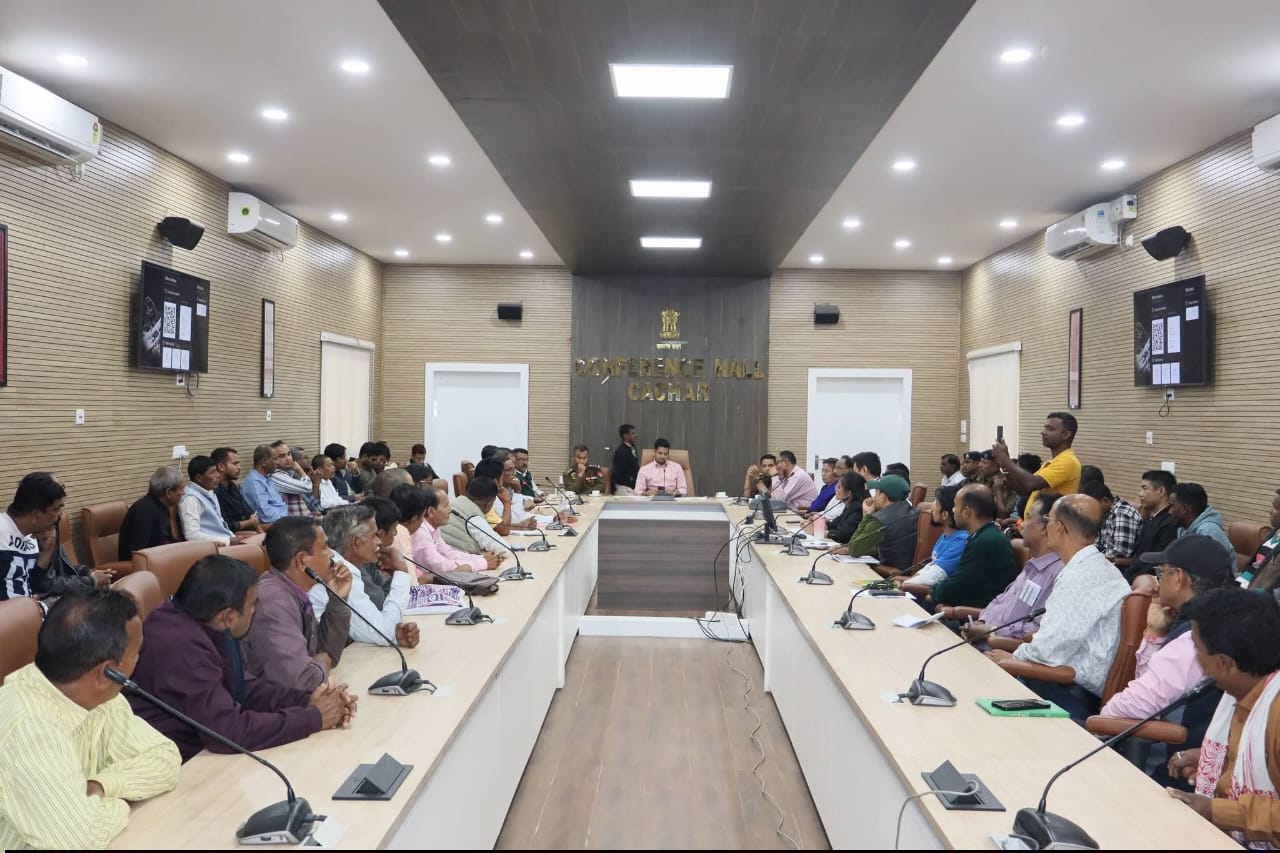
way2barak, February 10 :–In a decisive step towards ensuring the smooth, safe and well-coordinated conduct of the historic Bhuban Tirtha Utsav & Mela 2026, the District Administration, Cachar, has finalised an extensive, multi-departmental operational framework for the mega religious and cultural event scheduled to be held from 13th to 16th February, 2026 at Bhuban Hill.
The comprehensive action plan was finalised during a high-level meeting held on Friday at the New Conference Hall of DC’S office and was presided over by Shri Aayush Garg, IAS, District Commissioner, Cachar.
At the outset, Shri Devid Kumar Borah, ADC, Cachar, welcomed all members and outlined the purpose of the meeting, placing the minutes of the previous year’s meeting before the house. This was followed by detailed deliberations on infrastructure readiness, crowd management, safety protocols, disaster preparedness, transport arrangements, power supply, sanitation, healthcare services, fire safety, water supply, volunteer management and public awareness measures.
A new Bhuban Tirtha Utsav & Mela Committee was formally constituted at the district level and organising level to ensure coordinated planning and execution. Senior officials from the district administration, police, forest, PWD, PHE, health, transport, excise, power, disaster management, ASTC and revenue departments were entrusted with defined responsibilities, ensuring a unified administrative command structure for the festival.
Infrastructure preparedness has been given high priority, with directives issued for clearing and repairing access roads, removal of encroachments and debris, installation of signage and creation of safe walkways to ensure smooth movement of devotees. Special emphasis has been laid on ecological safety, including forest fire prevention measures and clearing of vulnerable hill areas under MGNREGS to prevent fire hazards.
Security and crowd management arrangements will include traffic regulation at key points, establishment of temporary police control rooms, strict vehicle movement restrictions beyond Dashavatar Point, and round-the-clock policing at strategic locations. A strong disaster preparedness framework has been put in place through training of SDRF, Aapada Mitra and volunteers, deployment of fire safety teams, installation of fire extinguishers in vulnerable zones, and positioning of fire service units with firefighting equipment near high-risk areas.
Transport facilitation will be strengthened through the operation of special low-fare buses by ASTC and the Transport Department on key routes, with regulated fares and additional services between Sonai Point, Kabuganj, Lakhipur, Motinagar and Krishnapur. Parking management and disciplined vehicle movement will be strictly enforced by the local police administration.
Public safety communication will be reinforced through official announcements, media outreach and public advisories, ensuring that devotees remain informed about safety protocols, medical assistance systems and emergency response mechanisms. Clear instructions will be disseminated for crowd behaviour during medical emergencies, with trained medical teams positioned for immediate response.
Healthcare preparedness forms a critical pillar of the plan, with ambulances stationed at Dashavatar and Krishnapur points, medical teams deployed at the hilltop, Dashavatar, Krishnapur, Motinagar, Panichaki and lower hill areas, and round-the-clock emergency services ensured through Sonai PHC and Harina PHC. Temporary medical sheds, beds, medicines, paramedical staff and emergency evacuation arrangements will be in place throughout the mela period.
Sanitation and water supply measures will be executed by the PHE Department in coordination with the Puja Organising Committee, including the construction of sufficient temporary latrines at the hilltop and key congregation points, separate sanitation facilities for men and women, installation of drinking water tanks at Motinagar, Hatubhanga, Krishnapur and Bhuban Hill, and continuous monitoring of natural water sources to ensure clean, disinfected and safe water availability. Accommodation and drinking water facilities will also be ensured for deployed police personnel and medical teams.
Volunteer management will follow a structured and regulated system, with registration of devotees, issuance of regulated passes, trained volunteer deployment, submission of volunteer lists to police authorities, night-climb assistance teams, stretcher support for emergencies, bamboo barricading at difficult stretches, and coordinated support services for devotees and security forces. Large public display boards highlighting Do’s and Don’ts will be installed at checkpoints, supported by wide publicity through print and electronic media.
Strict enforcement measures will be undertaken by the Excise Department and Police to prevent the sale and consumption of intoxicating substances, with daily inspections, hilltop patrolling and preventive raids, ensuring a disciplined and spiritually conducive environment during the festival.
Reinforcing administrative accountability, District Commissioner Shri Aayush Garg, IAS, directed all concerned departments to conduct mandatory field inspections of the Bhuban Hill site, initiate immediate remedial measures in line with the approved action plan, and submit detailed field visit reports to the District Committee two days prior to the festival.
The meeting was also attended by the senior district officials, heads of departments and key stakeholders.
This is stated in a press release issued by Regional office of Information & Public Relations Barak valley Zone Silchar Assam.