

India & World UpdatesHappeningsBreaking NewsFeature Story
India’s 7.8 per cent GDP Growth: Is the Economy Really Moving Forward for Everyone? Written by Dr. Manoj Kumar Paul
Unemployment, Inflation, Inequality and the Reality Behind India’s Growth Numbers
✍️ Dr. Manoj Kumar Paul
India’s economy has once again produced a number that commands attention. During the April–June quarter of 2026–27, India’s real Gross Domestic Product (GDP) grew by 7.8 %. Real Gross Value Added (GVA) increased by 8.2 %, while nominal GDP grew by 10.3 %. The figures were released by the Ministry of Statistics and Programme Implementation (MoSPI) on 31 August 2026.
At a time when the global economy continues to face geopolitical tensions, uncertain trade conditions and uneven growth, such a rate is certainly significant.
But an important question remains:
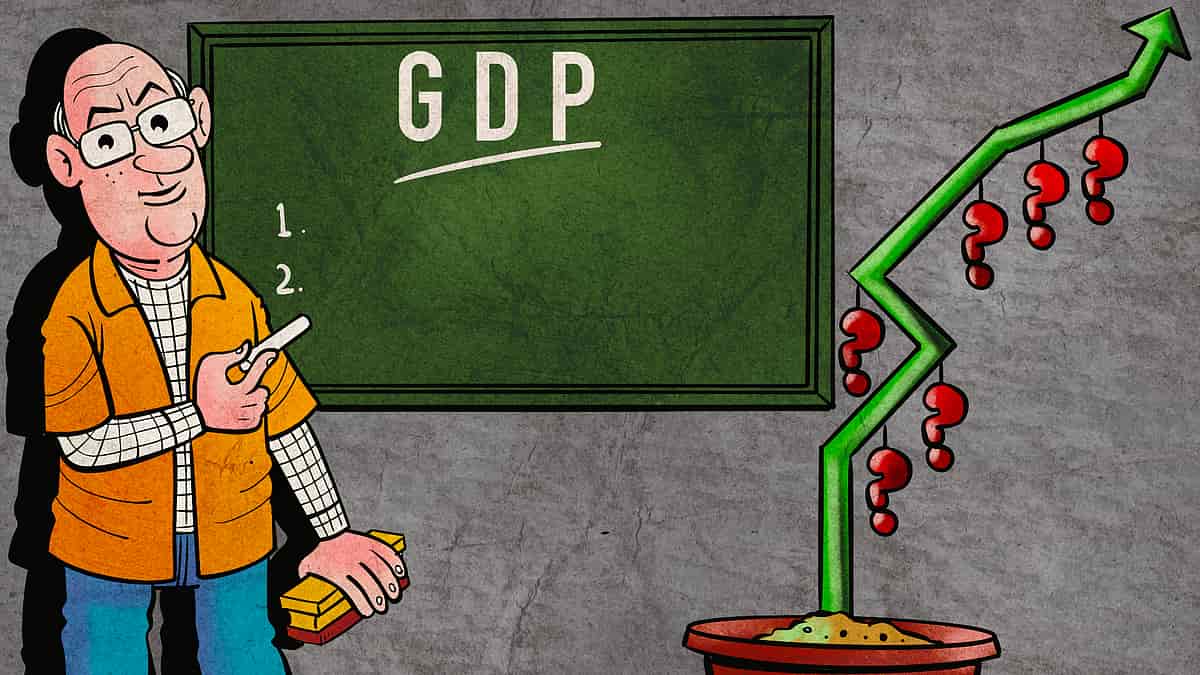
Does a 7.8% rise in GDP automatically mean that the economic well-being of ordinary Indians is improving at the same pace?
The answer is not straightforward.
GDP is rising. Labour-market indicators show some improvement. Yet unemployment, particularly in urban areas, remains a concern. Food prices continue to put pressure on household budgets. And questions about the distribution of income and wealth remain central to the debate on inclusive development.
India’s economic story, therefore, cannot be understood through the GDP number alone. We need to examine growth, employment, inflation and inequality together.
7.8% GDP Growth: A Significant Achievement, but Not the Whole Story
The 7.8% real GDP growth recorded in the first quarter of 2026–27 represents a substantial expansion in economic activity.
According to Ministry of Statistics and Programme Implementation (MoSPI), real GDP increased from approximately ₹75.46 lakh crore in Q1 of 2025–26 to ₹81.36 lakh crore in Q1 of 2026–27, measured at constant prices. Real GVA increased from ₹68.21 lakh crore to ₹73.82 lakh crore, registering 8.2 %t growth.
These numbers indicate that India’s productive capacity continues to expand.
A strong GDP growth rate can support higher government revenues, encourage private investment, create opportunities for businesses and strengthen India’s position in the global economy.
But GDP is essentially a measure of the size and growth of economic production. It does not tell us how the resulting income is distributed among households.
An economy can grow rapidly while some sections of society experience only modest improvements in their incomes. Conversely, when economic growth is accompanied by rising wages, productive employment and broader access to economic opportunities, its social impact can be much greater.
GDP may therefore be compared to an economy’s speedometer. It tells us how fast the vehicle is moving. It does not tell us whether everyone inside the vehicle is travelling comfortably or whether the benefits of the journey are being shared equally.
Unemployment: More Than Just a Number
India’s labour market presents a mixed but important picture.
The latest monthly Periodic Labour Force Survey (PLFS), released by MoSPI for August 2026, reported that the overall unemployment rate for persons aged 15 years and above was 5.0 %. The Labour Force Participation Rate (LFPR) increased to 55.6%, while the Worker Population Ratio (WPR) rose to 52.8% Rural unemployment declined to 4.1%.
These figures contain some encouraging signals. Labour-force participation has increased, and the rural employment situation showed improvement.
The overall female Labour-force participation rate (LFPR) also rose to 34.8% in August 2026, up from 33.7 % a year earlier. Rural female labour-force participation increased to 39.4 %.
Yet unemployment statistics alone cannot capture the full employment problem.
The deeper question is:
What kind of jobs are being created?
For a young graduate, simply being classified as “employed” does not necessarily mean that the employment is economically satisfactory. A person may possess a university degree but work in a low-paid occupation unrelated to his or her education or skills.
India therefore needs to move beyond the simple question of how many people have jobs and ask how many have productive, adequately paid, secure and skill-appropriate employment.
This is particularly important because India’s demographic advantage depends on converting its large young population into productive human capital.
Inflation: When Growth Meets the Household Budget
The second major issue is inflation.
India’s retail inflation rate, measured by the Consumer Price Index, was 4.82 % in August 2026, according to MoSPI. More importantly, food inflation was considerably higher, at 5.95%. Rural food inflation was 6.13%, while urban food inflation stood at 5.64 %.
For policymakers, headline inflation may appear manageable. But for ordinary households, inflation is experienced very differently.
People do not experience GDP growth while looking at a national income statement. They experience the economy through the price of rice, pulses, vegetables, milk, medicines, transport, electricity, school fees, rent and other essentials.
Suppose a person’s salary rises by 7 %. If the prices of essential goods and services rise substantially at the same time, the improvement in real purchasing power may be much smaller than the increase in nominal income.
This is why economic analysis must distinguish between nominal income and real income.
A growing economy is important. But what ultimately matters to households is how much they can actually buy with the income they earn.
The difference between GDP growth and household experience becomes particularly visible when food prices rise faster than the general price level.
Inequality: Who Gets the Benefits of Growth?
Inequality is perhaps the most complex part of India’s economic story.
There is evidence that consumption inequality has declined.
According to the government’s Household Consumption Expenditure Survey (HCES) 2023–24, average monthly per-capita consumption expenditure was ₹4,122 in rural India and ₹6,996 in urban India, excluding the imputed value of free items received through welfare schemes.
The urban-rural consumption gap declined from 84 % in 2011–12 to 70 % in 2023–24. The official survey also reported that the Gini coefficient of consumption expenditure declined from 0.266 to 0.237 in rural India, and from 0.314 to 0.284 in urban India, between 2022–23 and 2023–24.
These figures provide an important positive dimension to the inequality debate.
However, consumption inequality and income or wealth inequality are not the same thing.
The World Inequality Report 2026, drawing on the World Inequality Database, estimates that in 2024 the richest 10 % of Indians received about 57.7 % of national income, while the bottom 50 % received about 15 %. Its estimates put the wealth share of the top 10 % at around 65 %, compared with 6.4 % for the bottom 50 %.
These estimates should not simply be placed alongside the government’s HCES figures as though they measure the same thing. HCES measures household consumption, while the World Inequality Database attempts to estimate the distribution of income and wealth using a broader methodology.
The important lesson is that economic inequality has several dimensions.
A household may consume more than it did previously and still possess only a small share of national income or wealth.
Therefore, the question is not simply whether living standards are improving. It is also whether economic opportunities and the gains from growth are being distributed broadly across society.
The Missing Link: Growth and Employment
One of India’s most important economic challenges is strengthening the relationship between economic growth and employment generation.
If growth is concentrated in highly capital-intensive industries, advanced technology or specialised services, production may rise rapidly without creating sufficient employment for millions of workers with low or medium levels of skill.
This is why India needs stronger labour-intensive manufacturing.
Textiles, food processing, leather, electronics assembly, tourism, logistics, construction and a range of small and medium enterprises can play an important role in generating employment.
The Micro, Small and Medium Enterprises (MSME) sector is particularly important because millions of Indians depend directly or indirectly on small businesses for their livelihoods.
Access to affordable credit, technology, markets, skilled workers and modern infrastructure can help these enterprises expand.
India therefore needs an economic model in which investment, industrialisation and employment reinforce one another.
India’s Youth: Demographic Dividend or Economic Challenge?
India’s young population is often described as its greatest economic advantage.
But a young population becomes a demographic dividend only when young people have access to quality education, relevant skills and productive employment.
A young person spending 15 or more years pursuing education before entering the labour market naturally expects that investment in education to produce better economic opportunities.
When educational qualifications and employment opportunities fail to match, frustration can grow.
This is why India’s education system must become more closely connected with the changing requirements of industry and the economy.
Skill development is important, but skill development alone is not enough.
Universities and colleges need stronger links with industry, technology, entrepreneurship and practical workplace requirements. At the same time, vocational and technical education must receive greater social and economic recognition.
The objective should not merely be to produce more degree holders, but to produce more capable, employable and economically productive citizens.
So, How Should We Read the 7.8 % Growth?
The 7.8 % GDP growth rate should neither be dismissed nor treated as the complete story of the Indian economy.
It is an important achievement and evidence of strong economic activity. The latest Periodic Labour Force Survey (PLFS) is conducted by the National Statistical Office (NSO), Ministry of Statistics and Programme Implementation (MoSPI) also shows rising labour-force participation and an overall unemployment rate of 5.0 %.
At the same time, food inflation was 5.95 % in August 2026, while independent research continues to identify substantial concentration of income and wealth.
The correct interpretation therefore lies beyond both excessive optimism and excessive pessimism.
India is growing rapidly.
That is a fact.
But the next question is:
How rapidly are ordinary people’s incomes growing?
Employment is being generated.
But the next question is:
How productive, secure and adequately paid are those jobs?
Official data indicate that consumption inequality has declined.
But another question remains:
How are income and wealth distributed across society?
Inflation is not at an extreme level in aggregate.
But food prices continue to matter greatly to household budgets.
These questions do not invalidate GDP growth. They simply remind us that economic growth and economic well-being are related, but they are not identical concepts.
From GDP Growth to People-Centred Growth
The ultimate purpose of an economy is not to produce impressive statistics. It is to improve people’s lives.
A 7.8% GDP growth rate is certainly encouraging. But its full significance will be realised only when a young graduate can find a job matching his or her skills; when a farmer receives a fair return for production; when workers see their real wages increase; when middle-class families can cope with the rising cost of education, healthcare and housing; and when poor households are not forced into debt simply to meet basic needs.
Therefore, India’s economic debate should move beyond the question:
“How fast is GDP growing?”
It should also ask:
How many productive jobs are being created?
How much are real wages increasing?
How much is household purchasing power improving?
How affordable are food, housing, healthcare and education?
And how widely are the benefits of economic growth being shared?
Because ultimately, the success of an economy is not recorded only in national accounts. Its most meaningful reflection can be found in the everyday lives of ordinary people.
India’s 7.8 % GDP growth is an important economic achievement—but it is not the final destination.
It should become the foundation for the next stage of development: more employment, higher real incomes, greater productivity, wider economic opportunity and a more inclusive distribution of the benefits of growth.
The real test of India’s economic success will therefore not be whether the GDP growth number remains impressive.
It will be whether the growth experienced in national accounts is also experienced in the household accounts of millions of Indians.
That is where the difference between economic growth and meaningful economic development truly lies.