
India & World UpdatesHappeningsBreaking NewsFeature Story
Rang De Basanti: The Colour of Sacrifice That Awakened a Generation, written by Shanku Sharma
//Shanku Sharma//
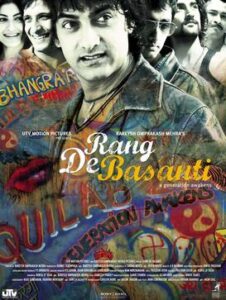
Released on Republic Day, 26 January 2006, Rang De Basanti (translated as “Paint It Yellow” or “Colour Me Saffron”) is more than a Bollywood film. Directed, co-written, and co-produced by Rakeysh Omprakash Mehra, it stands as a landmark in Indian cinema—a vibrant, energetic call to youth that blended historical reverence with sharp contemporary critique. It transformed apathy into action, at least on screen and briefly in streets, and remains a cultural touchstone two decades later.
The film opens with Sue McKinley (Alice Patten), a young British filmmaker in London, inspired by her grandfather’s diary. Her grandfather, a British officer, oversaw the execution of revolutionaries like Bhagat Singh yet harboured quiet admiration for their spirit. Sue travels to India to shoot a documentary on figures such as Bhagat Singh, Chandrashekhar Azad, Rajguru, Sukhdev, Ashfaqulla Khan, and Ram Prasad Bismil.
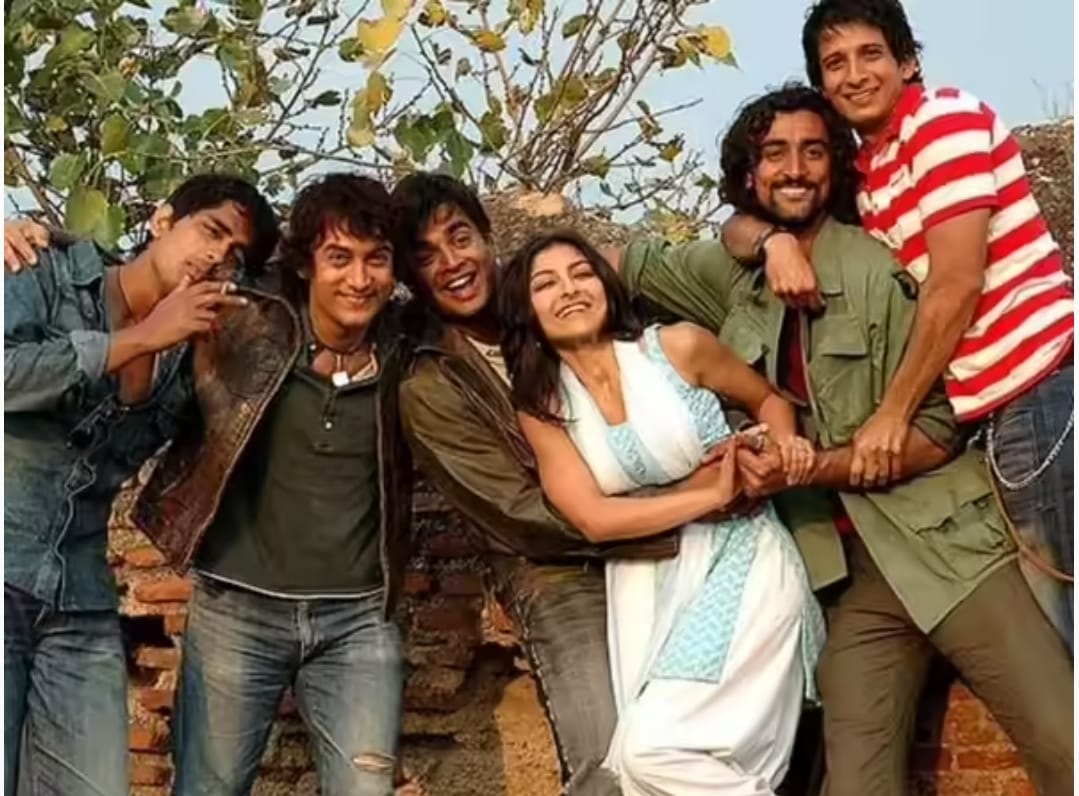
Struggling with auditions, she teams up with Sonia (Soha Ali Khan) and casts her carefree Delhi University friends: Daljit “DJ” Singh (Aamir Khan) as Azad, Karan Singhania (Siddharth) as Bhagat Singh, Sukhi (Sharman Joshi) as Rajguru, Aslam (Kunal Kapoor) as Ashfaqulla Khan, and Laxman Pandey (Atul Kulkarni) as Bismil. Sonia plays Durga Bhabhi. The group—initially cynical, party-loving, and disillusioned with India’s corruption and inequality—gradually internalises the revolutionaries’ ideals while filming.
The turning point is the death of Ajay Rathod (R. Madhavan), Sonia’s fiancé and an Indian Air Force pilot, in a MiG-21 crash caused by corrupt defence procurement (substandard parts). The government blames pilot error. This personal loss radicalises the friends. They shift from cynicism and candlelight protests to decisive action against the corrupt defence minister and other enablers, ultimately broadcasting their message before paying the ultimate price.
The narrative intercuts past and present with stylish editing, pulsating A.R. Rahman music, and Binod Pradhan’s dynamic cinematography, making history feel immediate and urgent.
The characters represent a microcosm of urban India—Sikh, Muslim, Hindu, rich and middle-class—highlighting unity amid diversity in the fight for justice.
Rang De Basanti redefines patriotism not as blind flag-waving but as active resistance to corruption and injustice. It asks: What does it mean to love your country when its systems fail its people? The revolutionaries’ sacrifices “paint” the youth in the colour of resolve (basanti evoking saffron, spring, and sacrifice, as in Bhagat Singh’s anthem Mera Rang De Basanti Chola).
It critiques the “brown sahibs” who replaced British oppressors with their own brand of exploitation. The film argues that true freedom requires constant vigilance. It explores generational disconnect—youth who know little of their history and feel powerless—while showing how engaging with the past can ignite change.
Mehra drew from real life: his Delhi University days, Air Force connections, MiG-21 crashes (the “flying coffin”), and corruption scandals. The story “borrowed from real life, then real life borrowed from us.”
The film was a commercial and critical success despite initial doubts (cast reportedly returned fees fearing flop). It broke opening records, earned around ₹97-100 crore worldwide on a ₹28 crore budget, and ranked among 2006’s top Hindi grossers.
Critics praised its energy, performances, music, and message, though some noted the climax’s preachiness or radical turn. It won the National Film Award for Best Popular Film Providing Wholesome Entertainment (plus awards for editing, audiography, and playback), multiple Filmfare Awards, and was India’s Oscar entry (though not nominated). It earned a BAFTA nomination for Best Film Not in English.
Its real impact was cultural and political. Candlelight vigils in the film inspired real protests, notably in the Jessica Lal murder case. It galvanised youth activism, influenced movements like India Against Corruption, and sparked debates on civic duty. Many young people credit it with awakening political consciousness.
Controversies included initial censorship concerns over MiG-21 depictions and defence ministry scrutiny, but it received clearance. Some viewed the vigilante ending as endorsing violence; Mehra framed it as poetic and cautionary.
Twenty years on, Rang De Basanti resonates because its core issues—corruption, institutional failure, youth disillusionment—persist. In an era of social media protests and renewed debates on nationalism, it reminds us that cinema can mirror and shape society. A.R. Rahman’s soundtrack still energises, and the film’s fusion of fun, friendship, history, and high stakes feels fresh.
As Mehra noted, the line between reel and real blurred. The film didn’t just tell a story; it painted a generation with the colour of awareness and sacrifice. In the words echoed by its characters: No country is perfect; you have to make it better.
Rang De Basanti didn’t just entertain—it challenged viewers to pick up the brush.