
NE UpdatesHappeningsBreaking News
15 more pygmy hogs return to their historical home in Manas National Park
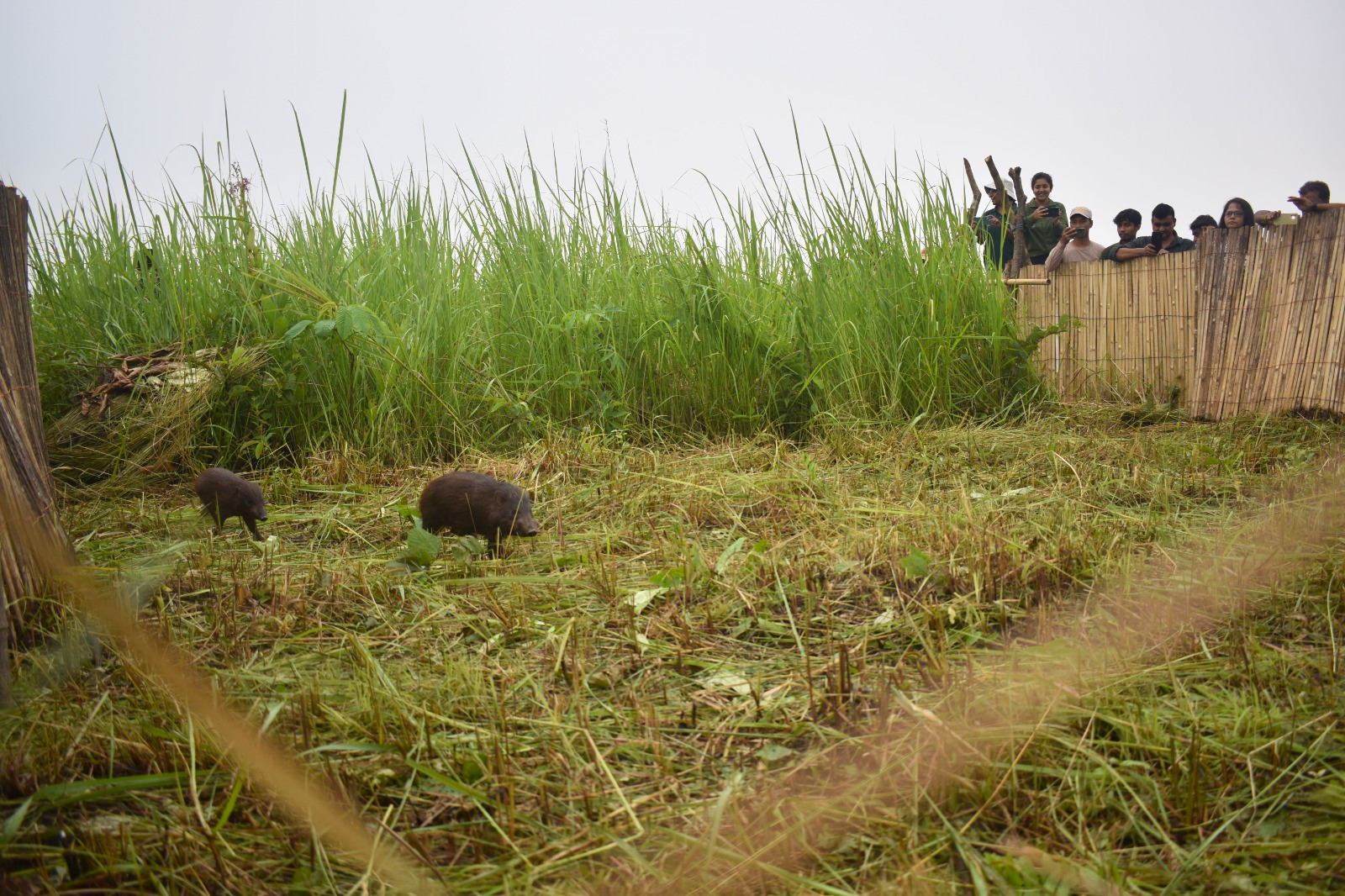
way2barak, June 7: : Fifteen captive-bred pygmy hogs were released on Sunday into the Kuribeel grasslands of Manas National Park (MNP) by the Pygmy Hog Conservation Programme (PHCP) implemented under the aegis of Assam Forest Department.
The 15 pygmy hogs – nine females and six males- were released in the presence of Dr. Vinay Gupta, PCCF (Wildlife) and Chief Wildlife Warden of Assam.
Pigmy hog (Porcula salvania) is the world’s smallest and rarest wild pig and a species listed as Endangered on the IUCN Red List. It has sadly been threatened with extinction.
Over the next five years, the PHCP plan to release around 80 Pygmy Hogs, with the goal of rebuilding a thriving wild population of approximately 300 animals by 2040.
Dr. Vinay Gupta stated, “The reintroduction of the endangered Pygmy Hog in Manas National Park under the Pygmy Hog Conservation Programme is a remarkable conservation achievement.”
“Such efforts are vital for restoring grassland ecosystems and safeguarding threatened species. I look forward to seeing a stable and self-sustaining pygmy hog population in this landscape, further strengthening Manas as a globally important biodiversity conservation area,” he further said.
This is the sixth release of pygmy hogs into MNP since 2020, which takes the total number of the endangered species released by the PHCP up to 78. Sunday’s release marks a true homecoming for the pygmy hog as the founder population for the conservation breeding programme was originally captured from the Kuribeel grasslands of the Bansbari Range in Manas, where these animals have now been reintroduced.
With no confirmed signs of pygmy hogs in Kuribeel for the past nine years, this release represents a significant milestone in the recovery of the species and the restoration of its historical range.
Shri Suman Mohapatra, Addl. PCCF & CHD, BTC, said, “The return of the pygmy hog to Manas is a testament to successful habitat restoration and collaborative conservation efforts. It reflects the improving health of Manas’ grasslands and reinforces our commitment to securing this unique species and its ecosystem for future generations.”
The Pygmy Hog Conservation Programme (PHCP), a collaborative initiative involving the Assam Forest Department, Durrell Wildlife Conservation Trust, the IUCN SSC Wild Pig Specialist Group and Ecosystems-India, with Aaranyak as a key implementation partner, has been instrumental in rescuing the critically endangered pygmy hog from the brink of extinction after the species was feared extinct during the 1970s.
Dr. C. Ramesh, Field Director of Manas National Park and Tiger Reserve, highlighted that Manas harbours some of the largest and most ecologically significant grassland landscapes which are not only vital for biodiversity conservation but also serve as natural water reservoirs, playing a crucial role in sustaining the long-term water security and livelihoods of farming communities living around the park.
Dr Ramesh stated that these grasslands provide indispensable habitat for a range of specialized wildlife, including the highly endangered pygmy hog whose future is intrinsically linked to the health and extent of these grassland ecosystems.

The PHCP has so far successfully bred and reintroduced 194 hogs in Assam, India, which, and happy to report, for the first time since the reintroduction programme began, may now be outnumbered by their current global wild population.
“The Pygmy Hog Conservation Programme (PHCP) started its work in 1996 when two males and four females were captured from the Bansbari Range of Manas National Park,” said Dr. Parag Jyoti Deka, Director of the PHCP.
The reintroduction of captive-bred hogs to the wild began in 2008. Prior to releases in Manas National Park, the PHCP selected other appropriate grasslands in Assam for reintroductions of the pygmy hog.
“The PHCP has successfully re-established a wild pygmy hog population in Orang National Park through the release of 59 captive-bred individuals. The Park is located approximately 120km southeast of Manas, on the north riverside of the Brahmaputra River,” said PHCP Field Scientist Dr. Dhritiman Das adding today, the population is estimated at around 250 hogs and is believed to consist entirely of wild-born animals, marking a significant conservation achievement.
Dr. Bibhuti Prasad Lahkar, Deputy Executive Director of Aaranyak, stated that the organisation would continue its role as a conservation partner in the PHCP that emphasises on grassland habitat restoration that is vital for conservation of pygmy hogs and other grassland-dependent species.