

India & World UpdatesHappeningsBreaking NewsFeature Story
The literary contributions of Syed Mujtaba Ali, written by Shanku Sharma
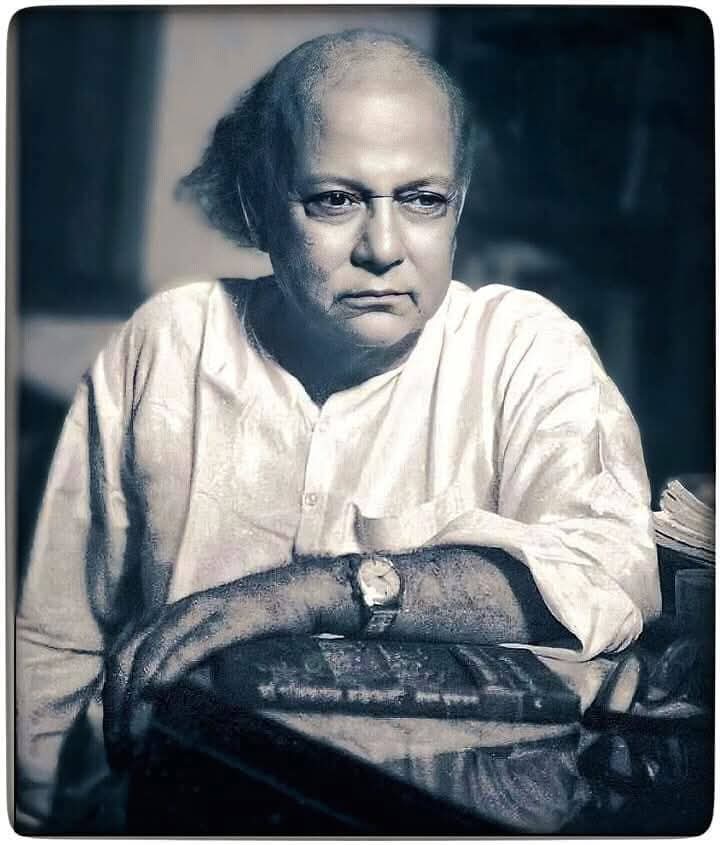
//Shanku Sharma //
Syed Mujtaba Ali was never just a Bengali writer. He was a polyglot, a traveler, a cultural mediator—someone who could move with ease from Kabul to Cairo, from Berlin to Santiniketan, and turn those experiences into literature that felt both intimate and expansive. His works carry the texture of lived encounters with the world, yet they remain firmly rooted in the rhythms of Bengali prose.
Ali’s life itself reads like a narrative. Born in 1904 in Karimganj, he studied at Tagore’s Santiniketan before pursuing higher education in Germany and France. He spent years teaching in Afghanistan and later in Egypt, worked at various academic and cultural institutions in India and abroad, and picked up more than half a dozen languages along the way. This restless intellectual journey gave him a vantage point that few of his contemporaries possessed, and it seeped into everything he wrote.
His first book, Deshe Bideshe, is a masterpiece of travel writing. Based on his time in Afghanistan during the late 1920s, it is at once a memoir, a cultural portrait, and a subtle political commentary. Ali’s descriptions of Afghan society—its hospitality, its rigid traditions, its brushes with modernity—are rendered with a humor and warmth that make the text glow even today. Unlike conventional travelogues that exoticize foreign lands, Ali’s account humanizes them, showing how empathy can be as powerful as observation.
But Ali’s true genius perhaps lies in his essays. Collections like Panchatantra and Chacha Kahini reveal a writer who could marry sharp satire with conversational ease. He could puncture vanity and pretension without ever sounding heavy-handed. One moment he is recounting an anecdote from his travels, the next he is dismantling a social absurdity with a single ironic twist. His essays feel less like polished lectures and more like spirited adda—witty, sharp, and unforgettable.
Language was more than a craft for him; it was a battleground. In the charged years of the late 1940s and early 1950s, when East Pakistan tried to impose Urdu, Ali spoke out with clarity and courage in defense of Bengali. His essays and speeches from that period capture the urgency of protecting one’s mother tongue as the soul of a people. He became, in effect, a forerunner of the Bengali Language Movement, giving intellectual voice to what would soon erupt as mass struggle.
His fiction, though less central to his reputation, adds another shade to his work. Stories like Shabnam and novels like Abishwasya reveal a writer who could adapt the cadences of Bengali to foreign landscapes without losing authenticity. These works don’t have the same satirical punch as his essays, but they show his versatility and his refusal to be confined to a single genre.
What makes Syed Mujtaba Ali’s contribution so enduring is that he never treated literature as something to be locked away in bookshelves. For him, it was a way of living—curious, critical, open to the world. His writing carries the rare quality of being simultaneously worldly and deeply Bengali, a combination that still feels fresh in an age where cultures often fold inward.
Half a century after his death in 1974, his voice continues to resonate because it was never provincial. It was the voice of someone who understood that to know one’s own culture deeply, one must also step outside it. In Ali’s prose, readers discover not only the charm of a master stylist but also the generosity of a mind that belonged everywhere.