

India & World UpdatesHappeningsBreaking News
Revisiting Imtiaz Ali’s Tamasha, written by Shanku Sharma
// Shanku Sharma//
In Tamasha (2015), Imtiaz Ali delivers not just a love story, but an aching portrait of identity crisis, societal expectations, and the often invisible war between who we are and who we are told to be. The film, starring Ranbir Kapoor and Deepika Padukone, is a deeply personal tale that resonates with anyone who has ever felt like an outsider in their own life. Beneath its vibrant surface, Tamasha is a melancholic exploration of self-destruction and self-discovery.
Ved (Ranbir Kapoor) is introduced as a man shaped by stories. As a child, he is mesmerised by a roadside storyteller in Shimla. But life forces him into a role — that of an obedient son, a conventional employee, and a predictable adult. The vibrant boy with a head full of myths becomes a robotic corporate worker in a grey world. His mask is seamless — untill he meets Tara (Deepika Padukone) in Corsica, where they both decide to “not reveal” who they are.
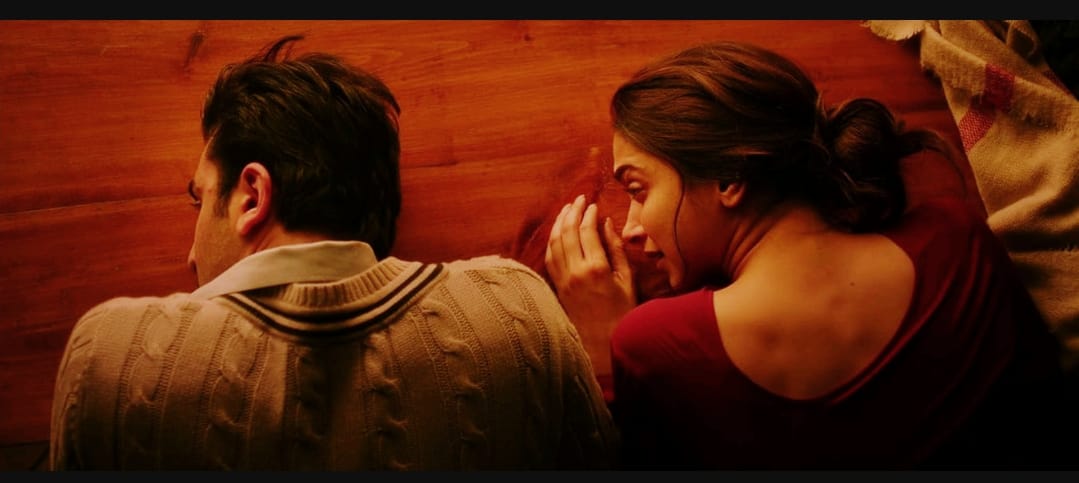
Corsica becomes the fantasy. Tara meets a version of Ved untethered from expectations. When they reunite in Delhi, Ved is back to being the ‘product’ of societal conditioning — dull, predictable, and angry without understanding why. It is in this jarring contrast that the film’s emotional core begins to ache.
Deepika’s Tara is not the manic pixie dream girl here to fix Ved. Instead, she sees the dissonance in him, and when confronted by the ‘real’ Ved, she experiences heartbreak. Her pain isn’t just about losing the man she loved — it’s about watching someone deny their truth. Her rejection is a moment of tough love, a push that begins Ved’s downward spiral but also leads to his awakening.
Tara’s heartbreak is also nuanced — she grieves not just for love lost but for the tragedy of seeing someone retreat from their essence. In her silence and restraint, Imtiaz Ali paints an emotionally intelligent woman, caught between romance and realism.
The most heartbreaking segment of Tamasha is not when love is lost but when Ved breaks down — not in front of Tara, but in front of himself. The scene at the dinner table with his family, where he mindlessly agrees to an arranged marriage, is chilling. The quiet compliance, followed by his public meltdown at work, is both absurd and tragic. His identity is unraveling.
The narrative arc returns to where it began — the storyteller. Ved reclaims his truth not by destroying the past but by reconnecting with it. He visits his childhood self, the roadside raconteur, the joy of invention and imagination. In that rediscovery lies salvation.
The final act, where Ved quits his job and stages his own play, is cathartic. He is still navigating life, but now with authenticity.
Imtiaz Ali, through Tamasha, critiques not only the loss of individuality but the world that demands that loss. The pain in Tamasha is not just Ved’s, but ours — the pain of living in performance, of wearing a mask for survival. The film does not offer easy solutions. Instead, it invites us to ask: Who am I when no one is watching?
Tamasha is a brave, bruised, and beautiful reminder that the most important story we tell is the one we live. And to live it truly, we must dare to be the hero — not of a grand myth, but of our own quiet truth.