
Barak UpdatesHappeningsBreaking NewsFeature Story
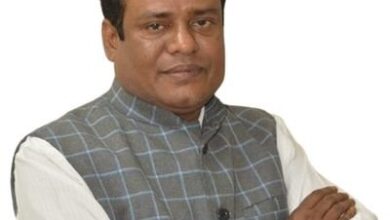
Education at a Crossroads: Challenges of the Present Era, written by Dr. Manoj Kumar Paul

✍️ Dr. Manoj Kumar Paul
(Former Principal of Women’s College Silchar, Assam)
Education at the Brink of a Deep Crisis
There was a time when education was the soul of society—the life force of civilization and the primary means of shaping a healthy human mind. Today, that soul appears to be steadily eroding. Commercialization, blind competition, and mechanical efficiency have penetrated every vein of the education system. What was once meant to cultivate thinking minds, encourage questioning, and instill values has now been reduced to examination scores, rankings, and career-oriented success metrics. Schools and universities are no longer centres of knowledge; they are increasingly functioning as factories producing employable manpower.
The state, too, now treats education less as a means of social transformation and more as an economic instrument. In policy-making, “skills” and “technology” have replaced “humanism” and “critical thought.” Teachers are burdened with administrative duties, students are trapped in relentless competition, and parents are obsessed with comparison. This threefold pressure has shattered the human foundation of education.
As a result, the system stands in deep contradiction—new policies are announced, but the ecosystem needed for their implementation remains absent. Discipline exists without inspiration, marks without understanding. The fundamental purpose of education—shaping human beings—is gradually disappearing. This crisis forces us to ask: Is education merely a tool for earning, or a pursuit toward building an enlightened society?
Government Schools vs. Private Schools: The Conflict of Quality, Prestige, and Reality
Today’s parents view education not merely as learning, but as an investment for future success. Government schools often fail to meet expectations due to teacher shortages, irregular classes, and weak infrastructure. In contrast, private schools promise modern curricula, English-medium instruction, smart classrooms, smaller class sizes, and efficient management—making them appear as “reliable alternatives.”
Private schooling has become a symbol not only of quality education but also of social mobility and prestige. Emphasis on English proficiency, digital skills, individual attention, cleanliness, safety, and performance-based evaluation further strengthens parental trust.
However, the social consequences are profound. Education is increasingly becoming class-based, determined by economic capacity. While parental preference for private schools reflects practical necessity, it also raises a critical question about state accountability: Can an education system that fails to ensure equal opportunity truly be called “quality education”?
Educational Inequality and the Language Crisis: A Divided Reality from Primary to Higher Education
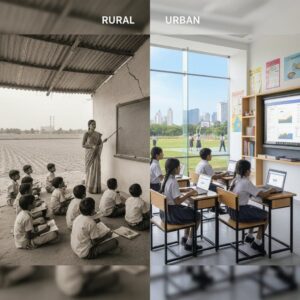
Under the same national education policy, two parallel worlds have emerged—government and private. While government institutions struggle with poor infrastructure and staff shortages, private institutions offer air-conditioned classrooms, smart boards, foreign curricula, and corporate connections. Education is no longer a fundamental right; it has become a market commodity.
Mother Tongue vs. English
English is widely perceived as a marker of modernity and success, while mother-tongue schools are steadily declining. Despite UNESCO and national policy recommendations advocating mother-tongue instruction at the primary level, implementation remains minimal—disconnecting children from their culture and history.
Division in Higher Education
Elite institutions like IITs and IIMs offer world-class facilities, while most state universities lag behind. High fees and international exposure in private universities remain accessible only to the affluent, turning higher education into an “elite club.”
Social and Ethical Impact
This dual system creates psychological and cultural divides—private school students grow confident, while government school students internalize inferiority. When education is dictated solely by market logic, ethics, humanities, and cultural consciousness inevitably suffer. It is the state’s responsibility to restore education as an equalizing force.
Educational Statistics: Enrollment, Dropouts, and Teacher–Student Ratio
India’s Gross Enrollment Ratio (GER) at the primary level has reached nearly 98% (MHRD, 2024). However, it drops sharply to around 77% at the secondary and 63% at the higher secondary level. Poverty, parental illiteracy, irrelevant curricula, discouraging school environments, child marriage, and domestic responsibilities—especially for girls—are major causes.
The student–teacher ratio also undermines quality. While UNESCO recommends 30:1, many Indian states exceed 45:1 (U-DISE, 2024). In higher education, GER stands at just 28.4% (AISHE, 2023), with quality weakened by faculty shortages, contractual appointments, and limited research funding.
Irrelevance of the Curriculum
One of the key reasons for educational decline is an outdated curriculum disconnected from real-life challenges. Learning has become rote-based and exam-centric, depriving students of critical thinking, creativity, and practical application.
In a world grappling with AI, climate change, and shifting economic realities, curricula still marginalize ethical education, mental health, financial literacy, and responsible technology use. Political and administrative interference further restrict academic freedom, reducing education to job-oriented credentialism.
Quality of Education and the Digital Divide
Technology has become essential to modern education, yet in India it has also deepened inequality. During the COVID-19 pandemic, nearly 64% of students could not participate regularly in online learning, with rural areas worst affected.
Urban private schools possess advanced digital infrastructure, while rural government schools lack even basic internet access. NEP 2020 emphasizes digital inclusion, but uneven distribution risks creating a new class divide. Technology must become a tool for inclusion, not exclusion.
The Allure of the Digital World
While digital access has increased convenience, overdependence has weakened attention, perseverance, and deep thinking. Smartphone addiction, multitasking during online classes, and visual content dominance have eroded reading habits and imagination. Misinformation and superficial engagement undermine critical reasoning, weakening teacher–student relationships. Conscious and ethical use of technology is therefore essential.
Artificial Intelligence and the Crisis of Thinking Ability
AI has accelerated learning but also threatens independent thinking. Automated content generation encourages memorization over reasoning. UNESCO (2024) warns of declining creativity in AI-dependent learning environments. In higher education, AI-generated research content compromises originality. AI literacy and ethical use must ensure AI complements—not replaces—human thought.

Social Media and Learning:
Social media has become a subtle but serious obstacle to effective learning. Constant exposure to short, fast-paced content reduces students’ attention span, deep reading habits, and ability to concentrate. Excessive screen time also affects sleep, mental health, and academic performance. The culture of comparison and online validation increases stress and shifts focus from learning to visibility. Instead of fostering curiosity and critical thinking, social media often encourages distraction and superficial engagement, quietly weakening the foundation of education.
Commercialization of Education and Inequality in Higher Education
Indian higher education is rapidly transforming into a profit-driven “education industry.” Branding, rankings, and corporate funding dominate academic priorities. Rising fees exclude middle- and lower-income students, while government universities suffer from limited resources. Capital, not merit, increasingly defines success. Education must be reclaimed as a public good, not a market product.
Students: Mental Stress, Competition, and Confusion
Education today revolves around marks and ranks rather than learning. Early exposure to coaching culture suppresses curiosity and creativity. NCRB (2023) reports over 13,000 student suicides—many linked to academic pressure and uncertainty. The absence of career guidance and mental health support intensifies distress. Education must prioritize well-being over relentless competition.

Teachers: Educators or Administrative Workers?
Teachers face increasing administrative burdens that erode their core role. Government teachers spend nearly 30–35% of their time on non-teaching tasks (RTE Forum, 2023). In higher education, accreditation reporting and contractual appointments (42% temporary faculty, UGC 2024) undermine academic quality. A clear separation between teaching and administration is essential.
Beyond Policy Change: The Need for Implementation Infrastructure
India’s educational crisis lies not in policy absence but weak execution. Despite NEP 2020’s vision, nearly 40% of government primary schools still lack computer labs and reliable electricity (MHRD, 2024). Teacher training gaps persist, especially in rural areas. Global examples—from Finland to South Korea—prove that strong infrastructure and accountability determine success.
Responsibility of Parents and Society
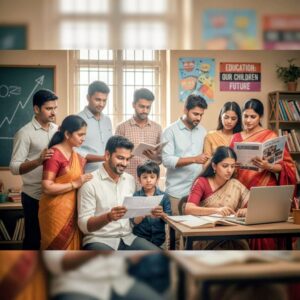
No reform can succeed without parental awareness. Many parents treat education as a project aimed at grades and jobs, ignoring emotional growth. NCERT (2023) reports that 68% of parents spend less than one hour per week discussing studies with their children. Imposing unrealized dreams on children damages identity formation. Families must become partners in education, not pressure machines.

Conclusion
The decline of education is not the fault of a single group—it is a collective failure. Policies without spirit, institutions without empathy, teachers without dignity, parents without understanding, and a society obsessed with competition have weakened education’s backbone. As Rabindranath Tagore said, “Education is the liberation of the mind.” Without freedom, education cannot nurture thought.
True reform demands a change in mindset—strengthening public infrastructure, empowering teachers, supporting mental health, enforcing mother-tongue education, ensuring digital inclusion, and fostering collaboration between state, educators, and society. Education is not mere information; it is the cultivation of thought and humanity. The future reflection in the mirror of education depends on us all.