
NE UpdatesHappeningsBreaking News
Water remains highest concern in sustainability: Director, CSIR-NEIST
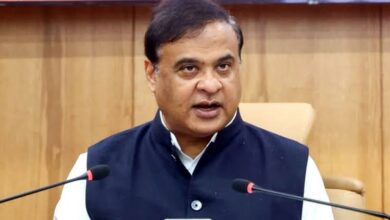
way2barak, APRIL 30: Water remains the foremost concern globally in the realm of sustainability while biodiversity is directly connected to water, said by Dr. Virendra M. Tiwari, Director of CSIR-NEIST Jorhat.
The eminent scientist mentioned that the issues related to biodiversity are very pertinent in the northeast region.
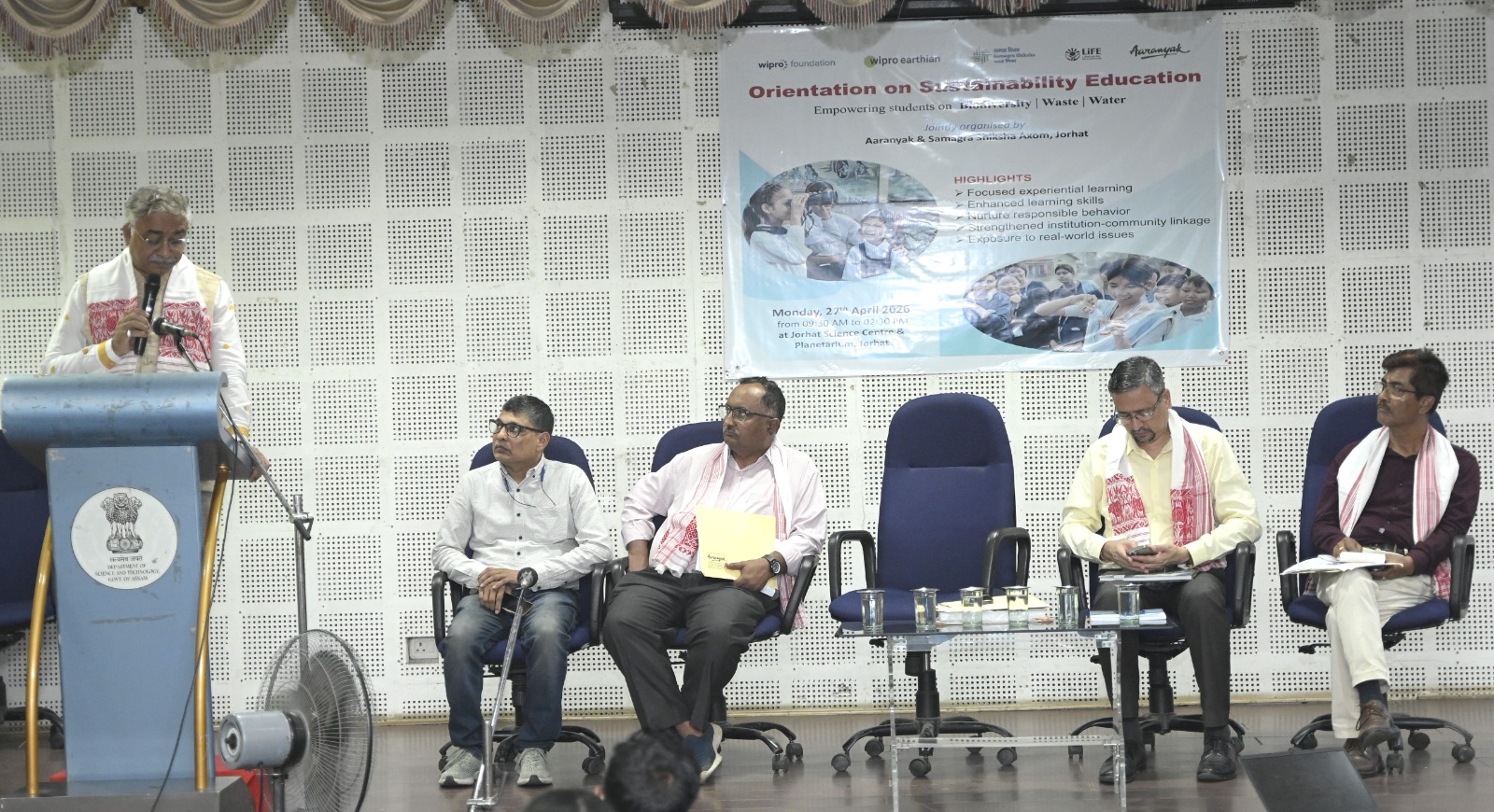
Delivering the keynote address at a day-long orientation workshop on sustainability education held in Jorhat on April 27 last, Dr. Virendra M. Tiwari shared insights into the diverse research domains of CSIR-NEIST and its hitherto significant contributions.
He expressed commitment to support educators in advancing sustainability education through holistic education and experiential learning approaches.
Emphasising the crucial role of teachers, he stated that educators were the architects of the future and play a pivotal role in shaping students as valuable human resources who are responsible and environmentally conscious citizens.
He raised concerns about soil quality degradation as a major challenge to societal well-being and discussed ways to address these issues within the community in Jorhat district of Assam
He flagged the negative impact of arsenic and fluoride contamination on groundwater in Jorhat and emphasised the potential for collaborative efforts to tackle these emerging concerns.
The day-long orientation programme for guide teachers on sustainable education was conducted by leading biodiversity conservation organisation Aaranyak in collaboration with Samagra Shiksha Axom (SSA), Jorhat, with support from the Wipro Foundation at the Jorhat Science Centre & Planetarium. Forty-three teachers from 43 schools across the district participated in the workshop.

The event was graced by eminent dignitaries, including Parash Goswami, DPO (TT), Samagra Shiksha Axom, Jorhat; Dr. Rajib Lochan Goswami, Retired Chief Scientist, CSIR-NEIST; and Dr. Karuna Kanta Sarma, Retired Principal Scientist, Assam Agricultural University.
Jayanta Kumar Pathak, Assistant Director and In-Charge Head of the Environment Education and Capacity Building Division (EECBD) at Aaranyak, provided an overview of the organisation and the impact of its sustainability education initiatives.
Parash Goswami, highlighted the effectiveness of the initiative, noting that it has enabled many teachers to achieve significant professional growth. He stated that this initiative is being implemented for the first time in 50 schools across the Jorhat district, covering diverse locations — flood-affected areas to regions facing arsenic contamination — where sustainability remains a major concern from
Dr. Karuna Kanta Sarma shared deep insights into integrated farming practices within communities for sustainable livelihoods. He emphasised that, for sustainable agricultural productivity, the generation of appropriate technologies, along with their validation and fine-tuning, is of utmost importance. He also remarked that “sustainability essentially refers to maintaining a trend of non-negative productivity.”
While discussing ecosystem balance and sustainability, he elaborated on the benefits of ecosystem services. He further noted that nature emits vibrations at approximately 7.83 Hz, which, although not perceptible to humans, are believed to have positive effects on health when individuals remain connected with nature.
Dr. Rajib Lochan Goswami while interacting with the participating teachers and stated that he would extend his full cooperation to this initiative for the greater benefit of society.
The technical sessions, conducted by Tikendrajit Gogoi and Ms. Ashatora Sarma, Project Officers and sustainability educators at Aaranyak, engaged participants through insightful presentations on key themes such as biodiversity, water and waste management, facilitating a deeper understanding of sustainability concepts among the teachers.
The programme concluded on a positive note, reinforcing the importance of collaborative efforts in promoting sustainability education and empowering educators to usher in meaningful change at the grassroots level.