
Barak UpdatesIndia & World UpdatesHappeningsBreaking News
Retirement Age Benefit : Subha Prasad Nandi Majumdar won case in Supreme Court
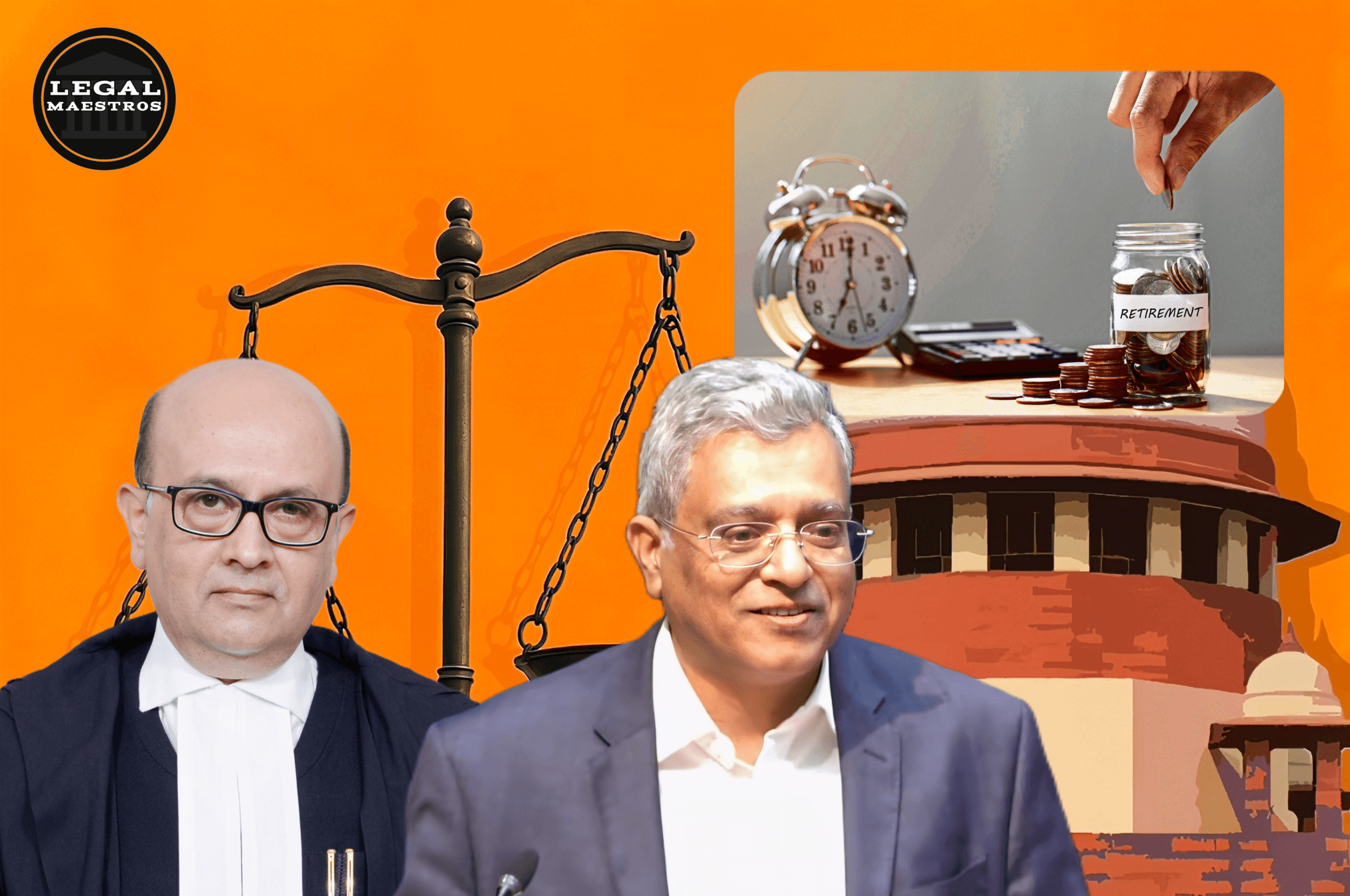
way2barak, August 1: The Supreme Court of India has ruled that a notification extending the retirement age for certain university employees in West Bengal cannot be interpreted to exclude those with teaching experience from state-aided universities outside of West Bengal. In a judgment delivered by a bench of Justice Pamidighantam Sri Narasimha and Justice Manoj Misra, the court set aside a Calcutta High Court Division Bench order, holding that classifying employees based on the geographical location of their past teaching experience is “artificial, discriminatory and arbitrary.” The court declared that such executive decisions “expose themselves as parochial, potentially undermining our resolve of fraternity.”
The case was brought by Subha Prasad Nandi Majumdar, who was initially appointed as a teaching staff member at Cachar College, Silchar, Assam, on January January 23, 1991. After 16 years of continuous service in Assam, he was appointed as the Secretary, Faculty Council for Post-Graduate Studies in Science at Burdwan University, West Bengal, in 2007. He was later promoted to the post of Senior Secretary on January 26, 2012.
The dispute arose after the State of West Bengal issued a Memorandum dated February 24, 2021, enhancing the retirement age from 60 to 65 years for certain non-teaching university staff, including the post held by the appellant. The benefit was conditional upon the employee having a “minimum of 10 years years of continuous teaching background/experience in any State-aided University or College.”
When the appellant sought this benefit, the University informed him on June 28, 2023, that he would retire at 60 because his teaching experience was not from a university or college aided by the State of West Bengal.
The appellant challenged this decision in the Calcutta High Court. A Single Judge allowed his writ petition, holding that the word “any” before “State-aided university” was wide enough to include institutions outside West Bengal. The judge reasoned that accepting the State’s interpretation would amount to impermissibly adding the words “in West Bengal” to the notification.
However, the State and the University appealed this decision. A Division Bench of the High Court reversed the Single Judge’s order. The Division Bench held that the 2021 notification must be read in conjunction with its parent statute, the West Bengal Universities (Control of Expenditure) Act, 1976. The court noted that a 2017 amendment to this Act defined ‘State-aided University’ and ‘State Government’ in a manner that limited their scope to institutions and the government within West Bengal. Therefore, the Division Bench concluded that the 10-year teaching experience had to be from an institution within the state.
Before the Supreme Court, Senior Advocate Mr. Gaurav Agarwal, for the appellant, argued against the narrow interpretation. Senior Advocates Mr. Jaideep Gupta and Mr. Krishnan Venugopal, representing the State of West Bengal and the University of Burdwan respectively, contended that the notification must be understood in the context of the parent Act’s definitions. They argued that the requirement of 10 years of continuous teaching experience must be from a West Bengal state-aided institution.
The Supreme Court disagreed with the respondents and the High Court’s Division Bench. The bench, in its judgment authored by Justice Narasimha, conducted a detailed analysis of the notification and the parent Act. The Court observed that the purpose of the phrase “in any State-aided University or Government-aided College” in both the Act and the notification was “only to denote that the employer, being a University or College must be an aided institution as against institutions which do not receive aid.” It was not intended to create a geographical limitation.
The judgment stated, “The purpose of the Notification is not to exclude those who had acquired the 10 years of teaching experience from universities or colleges outside West Bengal.” The Court found the classification to be without a rational basis, observing: “Extension of the retirement date, dependent on past experience of teaching in a university or a college located in West Bengal alone has no object to subserve and as such classification of employers into those who have acquired teaching experience in West Bengal and those who acquired such experience outside West Bengal is artificial, discriminatory and arbitrary.”
The Court heavily criticized the state’s stance, noting that such decisions have far-reaching consequences.
The Court concluded that the State and the University had failed to demonstrate any nexus between the requirement of teaching experience only in West Bengal and the objective of extending the retirement age. It termed the requirement a “classic case of a suspect classification intended to sub-serve only parochial interests and nothing more.” Responding to the argument that the appellant should have challenged the parent Act, the Court held it was unnecessary. It pointed out that the definition section of the Act itself begins with the words “unless the context otherwise requires,” making statutory definitions flexible.
The Supreme Court allowed the appeal and set aside the Division Bench’s judgment. It declared that the appellant, Subha Prasad Nandi Majumdar, is entitled to the benefit of the Notification dated February 24, 2021, and will now retire upon attaining the age of 65. The Court also awarded costs of Rs. 50,000 to the appellant.
(Courtesy: Law Trend)