
NE UpdatesHappeningsBreaking News
Aaranyak hosts 4th refresher workshop on applied environmental education
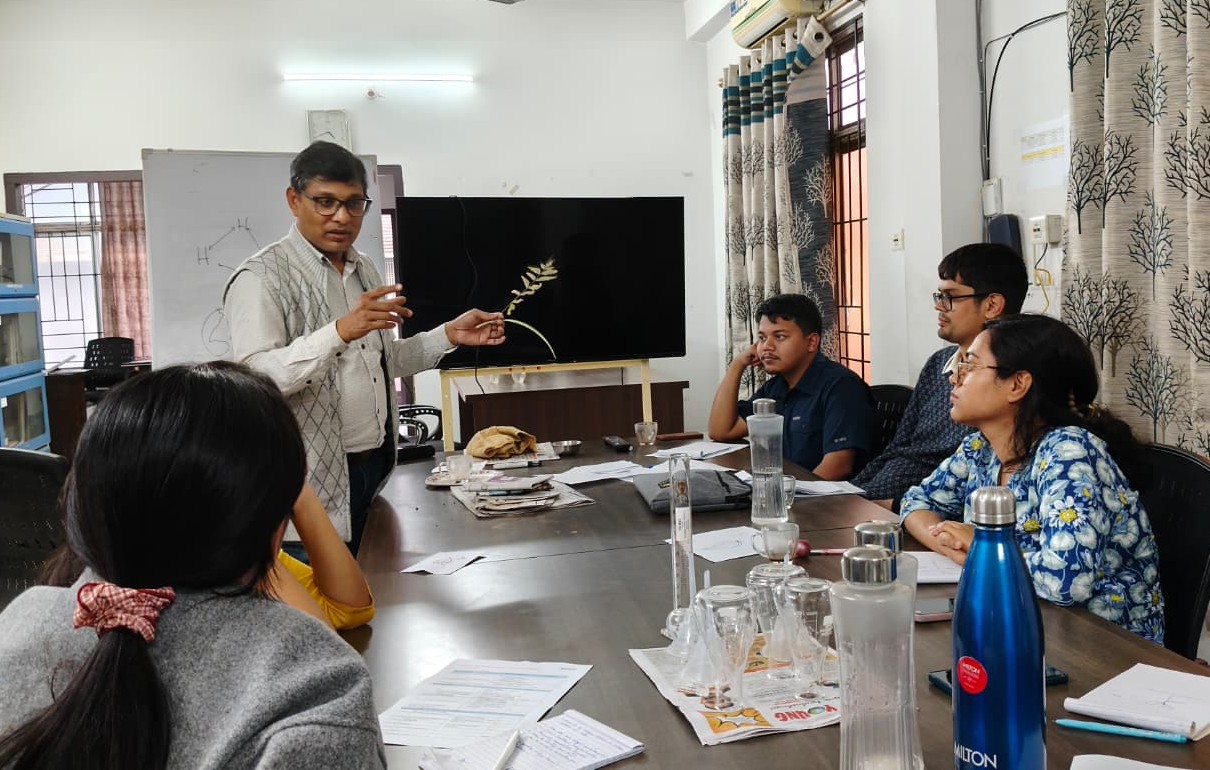
way2barak, February 14: Aaranyak, a leading biodiversity conservation organisation, through its Environment Education and Capacity Building Division (EECBD), organised the 4th Refresher Workshop on Applied Environmental Education from February 11 to 13 in Guwahati.
The three-day workshop brought together educators and practitioners working in environmental education and conservation outreach to strengthen their understanding of applied environmental education (EE) approaches and practical conservation strategies.
The workshop aimed to equip participants with the skills to identify environmental issues and design structured, practical interventions for diverse target groups, including schools and local communities.
The course was designed and led by Jayanta Kumar Pathak, Assistant Director and In-charge Head, EECBD. As the lead instructor, Pathak focused on enhancing participants’ understanding of effective conservation strategies, environmental education frameworks, and the Planning-Implementation-Evaluation (PIE) approach, along with community engagement methodologies.
Another key focus of the workshop was the integration of environmental education within school systems and the promoting experiential learning. Pathak highlighted the importance of examining gaps in existing approaches, understanding school functioning and curriculum frameworks, and exploring opportunities to integrate EE activities with formal education.
Prajnyan Sarma, Project Officer, EECBD, Aaranyak, presented a case study on classroom engagement strategies for water conservation and also introduced soil conservation related activities.
Tikendrajit Gogoi, Project Officer, EECBD, guided participants in developing environmental games and introduced creative experiential learning tools such as eco-printing and nature journaling.
The final day of the workshop emphasised ethical communication and effective community engagement. Pathak discussed the importance of understanding community backgrounds, cultural contexts, seasonal needs and the distinction between project-based and holistic engagement approaches. Participants also worked in groups to develop IEC (Information, Education and Communication) materials and learned basic evaluation techniques to assess the impact of environmental education interventions.
Sharing her experience, Sanshumoi Basumatary from Kokrajhar district, Assam, said that the workshop exposed her to several new ideas and approaches that significantly changed her perspective on environmental education.
The workshop concluded with an interactive valedictory session, encouraging participants to apply their learning in their respective institutions and locality, particularly in strengthening environmental education practices community levels for wellbeing of both human and nature.